Protoceratops
Name means “First horned face”
Protoceratops was a sheep-sized horned dinosaur with a frill but no real horns. It lived in the deserts of Mongolia.
Protoceratops was a small, early-branching ceratopsian from Late Cretaceous Mongolia and northern China. Known from hundreds of specimens, from hatchlings to adults, it is one of the best-understood dinosaurs and is famous for the 'Fighting Dinosaurs' fossil locked in combat with Velociraptor.
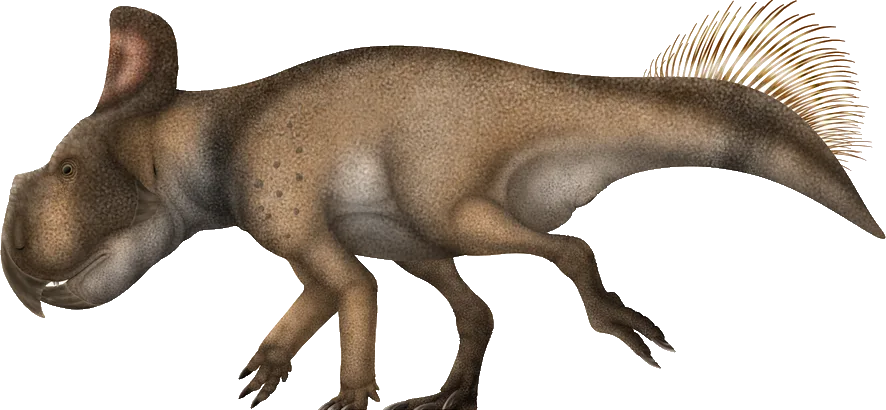
Protoceratops andrewsi Restoration.png — PaleoNeolitic · CC BY 4.0
Pictures
Spin it in 3D
3D model description: a 3D model of Protoceratops shaped from a scientific life reconstruction painting, with the painting's colours and skin texture wrapped around it. It is not a scan of a real fossil.
About this model
This model is shaped from a scientific life reconstruction by PaleoNeolitic: the painting's outline gives the 3D body and the painting itself is its skin. It is sized to the real animal's length (about 2.1 m), so in AR it appears life-size!
It looks best from the side, like the painting it comes from. It is not a fossil scan — museums such as the Smithsonian 3D collection share real fossil scans you can explore.
What might it sound like?
Transcript: Quick, gruff grunts, a little like a pig snorting
🤔 Nobody knows exactly how dinosaurs sounded
This is a scientific guess. A sheep-sized animal makes higher sounds than a giant one, and its bird and crocodile relatives use short grunts and calls, so Protoceratops may have grunted to its herd.
Voice boxes and soft tissue almost never fossilise, so sound reconstructions use clues: body size (bigger animals make lower sounds), the calls of living relatives (crocodiles boom with closed mouths; birds coo and hiss), and hollow structures such as hadrosaur crests that could have worked like a trumpet.
Sound: synthesised by DinoVerse from these scientific ideas (CC0). It is a creative guess, not a recording.
Food and habits
Herbivore
Plant-eater
How it ate
Cropped tough, woody plants with a deep, sharp beak and chopped them with rows of shearing cheek teeth, helped by strong jaw muscles anchored on its frill.
🔍 How do we know?
- beak and tooth shape
- strong jaw muscle attachments
- plant-eating relatives
Arrows show energy moving up the food chain: from food to eater.
Watch it walk
Quick facts
| 📏 Length | 1.8–2.5 m (6–8 ft) |
|---|---|
| ↕️ Height | 0.6–0.7 m (2 ft) |
| ⚖️ Weight | 60–180 kg (130–400 lb) |
| ⏳ When it lived | 75–71 million years ago (Late Cretaceous) |
| 📍 Fossils found | Flaming Cliffs (Bayn Dzak), Djadochta Formation, Mongolia; Tugrikin Shireh, Mongolia; Bayan Mandahu, Inner Mongolia, China |
| 🔎 Discovered | 1922 by Walter Granger and the American Museum of Natural History Central Asiatic Expedition |
| 🧬 Group | Ceratopsians — Ornithischia › Marginocephalia › Ceratopsia |
Where scientists disagree, we show a range. Sizes are for adults.
How big was it?
Where and when
- 📍 Flaming Cliffs (Bayn Dzak), Djadochta Formation, Mongolia (Asia)
- 📍 Tugrikin Shireh, Mongolia (Asia)
- 📍 Bayan Mandahu, Inner Mongolia, China (Asia)
Lived 75–71 million years ago
That's about 73 million years before you were born! Humans have only existed for about 0.3 million years.
See it on the big timeline →Did you know?
- 1Protoceratops was about the size of a sheep.
- 2One famous fossil shows a Protoceratops and a Velociraptor frozen in the middle of a fight!
- 3Scientists have found lots of Protoceratops, from tiny babies to grown-ups.
- 4Its eggs had soft, leathery shells, a bit like a turtle's eggs.
- The 'Fighting Dinosaurs' specimen, found in 1971, preserves a Velociraptor with its claw in the Protoceratops' neck while the Protoceratops bites its arm; both were probably buried by a collapsing sand dune or sandstorm.
- A 2020 study of Protoceratops embryos found that their eggs were soft-shelled, suggesting that hard-shelled eggs evolved more than once among dinosaurs.
- Because so many individuals are known, researchers have tracked how the frill and skull changed with age; frill size differences between adults may reflect differences between males and females, though this is debated.
- A nest of 15 juveniles found together suggests young Protoceratops stayed together, perhaps with some parental care.
Myth vs fact
❌ MythAncient people found Protoceratops skulls and invented the griffin legend from them.
✅ FactThis is a popular idea, but a 2024 review found little real evidence for it: griffin art and stories do not match Protoceratops skeletons well, and griffins appeared in art long before trade routes reached its fossil beds.
❌ MythThe famous eggs found in the 1920s were Protoceratops eggs, and Oviraptor was stealing them.
✅ FactIn the 1990s embryos showed those eggs belonged to Oviraptor-like dinosaurs, which were sitting on their own nests.
Mini quiz
1. About how big was Protoceratops?
2. Which dinosaur is it fighting in the famous 'Fighting Dinosaurs' fossil?
3. Where have most Protoceratops fossils been found?
Related animals
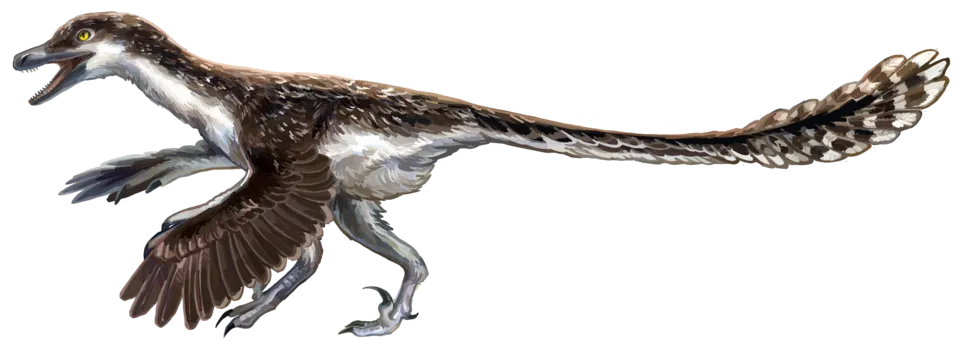
Velociraptor
TheropodLate CretaceousCarnivore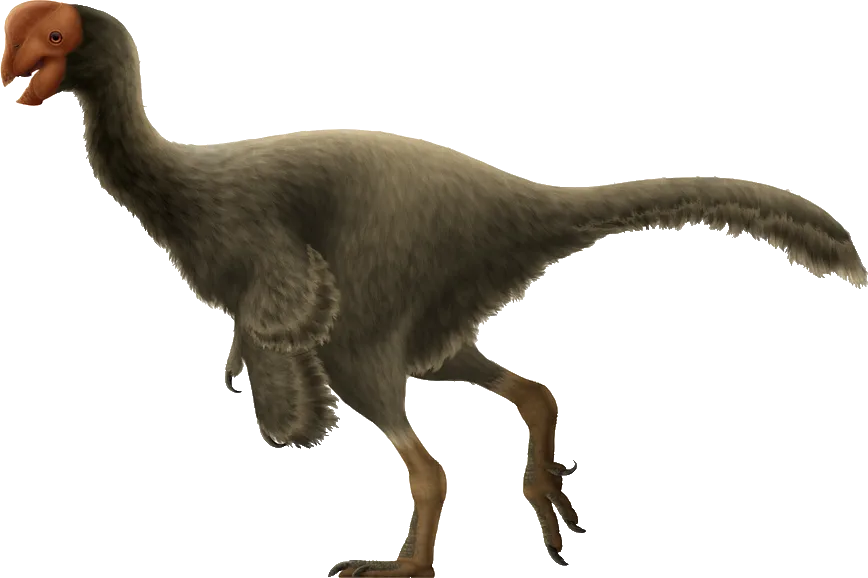
Oviraptor
TheropodLate CretaceousOmnivore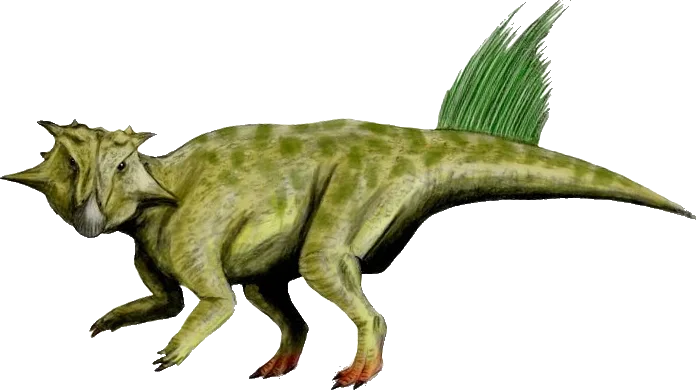
Psittacosaurus
CeratopsianEarly CretaceousHerbivore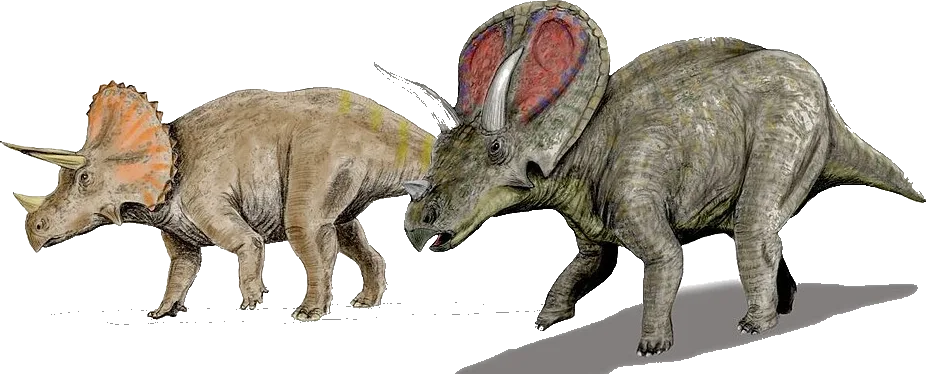
Triceratops
CeratopsianLate CretaceousHerbivore
Sources
Media on this page
- Protoceratops andrewsi Restoration.png — PaleoNeolitic · CC BY 4.0
- Fern in forest by I. Levitan (1895, N. Novgorod).jpg — Isaac Levitan · Public domain
- Protoceratops 3D model, shaped from the life reconstruction "Protoceratops andrewsi Restoration.png" — PaleoNeolitic (artwork); 3D shaping by DinoVerse · CC BY 4.0
- Protoceratops reconstructed call (synthesised) — DinoVerse (synthesised) · CC0 1.0
- Andrewsi.jpg — Tadek Kurpaski from London, Poland · CC BY 2.0
- Bagaceratops & Protoceratops evolution.png — Łukasz Czepiński · CC BY 4.0
- Fox site Protoceratops (5).jpg — Gary Todd · CC0
- Hyperborean-gryphon-persepolis-protoceratops-psittacosaurus-skeletons.jpg — Originally compiled by Kazvorpal · CC BY-SA 4.0