Oviraptor
Name means “Egg thief”
Oviraptor was a feathered dinosaur with a beak like a parrot. Scientists once thought it stole eggs, but it was actually looking after its own.
Oviraptor philoceratops was a beaked, feathered oviraptorid from the Late Cretaceous of Mongolia. Its name, 'egg thief', comes from being found on top of a nest that was later shown to belong to its own kind, and related fossils reveal that oviraptorids brooded their eggs like birds.
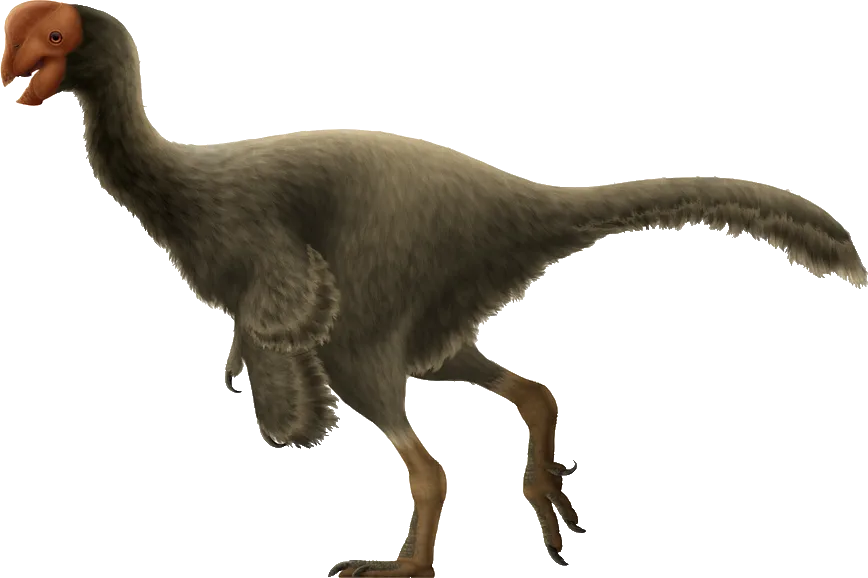
Oviraptor Restoration.png — PaleoNeolitic · CC BY 4.0
Pictures
Spin it in 3D
3D model description: a 3D model of Oviraptor shaped from a scientific life reconstruction painting, with the painting's colours and skin texture wrapped around it. It is not a scan of a real fossil.
About this model
This model is shaped from a scientific life reconstruction by PaleoNeolitic: the painting's outline gives the 3D body and the painting itself is its skin. It is sized to the real animal's length (about 1.8 m), so in AR it appears life-size!
It looks best from the side, like the painting it comes from. It is not a fossil scan — museums such as the Smithsonian 3D collection share real fossil scans you can explore.
What might it sound like?
Transcript: Two soft, nasal honks with a gentle closed-mouth coo, about 2 seconds
🤔 Nobody knows exactly how dinosaurs sounded
This is a scientific guess. Oviraptor was a bird-like, beaked dinosaur, and closed-mouth cooing and honking calls are common in birds. Scientists have suggested that many dinosaurs called this way, but no one knows exactly how Oviraptor sounded.
Voice boxes and soft tissue almost never fossilise, so sound reconstructions use clues: body size (bigger animals make lower sounds), the calls of living relatives (crocodiles boom with closed mouths; birds coo and hiss), and hollow structures such as hadrosaur crests that could have worked like a trumpet.
Sound: synthesised by DinoVerse from these scientific ideas (CC0). It is a creative guess, not a recording.
Food and habits
Omnivore
Eats plants and meat
How it ate
Crushed and snipped food with a toothless, parrot-like beak and two bony points on the roof of its mouth, which could handle both plants and small hard-shelled animals.
🔍 How do we know?
- toothless, deep, powerful beak
- a lizard skeleton found inside the original Oviraptor's body
- jaw shape similar to plant-eating and shell-crushing animals
Arrows show energy moving up the food chain: from food to eater.
Watch it walk
Quick facts
| 📏 Length | 1.5–2 m (5–7 ft) |
|---|---|
| ↕️ Height | 0.6–0.9 m (2–3 ft) |
| ⚖️ Weight | 30–40 kg (70–90 lb) |
| ⏳ When it lived | 75–71 million years ago (Late Cretaceous) |
| 📍 Fossils found | Djadochta Formation, Bayanzag (Flaming Cliffs), Mongolia |
| 🔎 Discovered | 1923 by George Olsen (American Museum of Natural History expedition) |
| 🧬 Group | Theropods — Saurischia › Theropoda |
Where scientists disagree, we show a range. Sizes are for adults.
How big was it?
Where and when
- 📍 Djadochta Formation, Bayanzag (Flaming Cliffs), Mongolia (Asia)
Lived 75–71 million years ago
That's about 73 million years before you were born! Humans have only existed for about 0.3 million years.
See it on the big timeline →Did you know?
- 1Oviraptor's name means 'egg thief', but it was really a good parent!
- 2It had no teeth, just a strong beak like a parrot's.
- 3Its relatives sat on their nests to keep their eggs warm, just like birds do.
- 4Inside the first Oviraptor fossil, scientists found the bones of a little lizard it had eaten.
- The first Oviraptor was found in 1923 lying on a nest of eggs that were assumed to belong to Protoceratops, so it was named 'egg thief, lover of ceratopsians'.
- In the 1990s an embryo of the close relative Citipati was found inside an identical egg, proving the eggs were oviraptorid and the adults were guarding or brooding them.
- Several oviraptorid skeletons have been found sitting on nests with arms spread over the eggs, a posture that strongly suggests feathered wings shielding the clutch.
- The original skull is damaged, so the size and shape of Oviraptor's head crest is uncertain; reconstructions often borrow from tall-crested relatives like Citipati.
Myth vs fact
❌ MythOviraptor stole and ate other dinosaurs' eggs.
✅ FactThe eggs it was found with were its own kind's. It was probably protecting them, not stealing them.
Mini quiz
1. What does 'Oviraptor' mean?
2. What was Oviraptor really doing on top of the eggs?
3. What did Oviraptor have instead of teeth?
Related animals
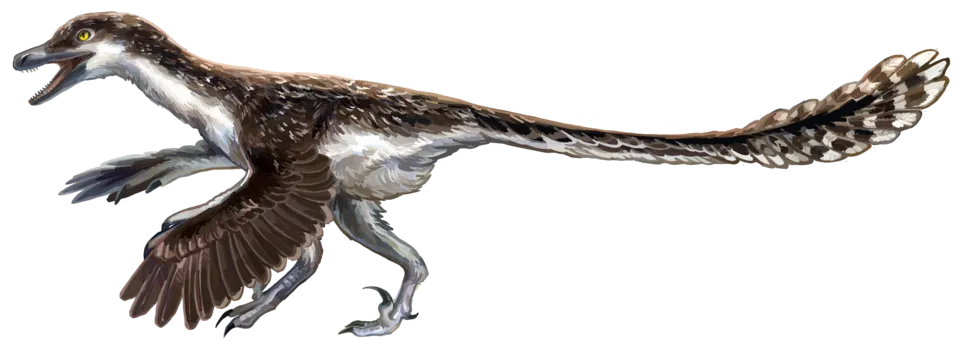
Velociraptor
TheropodLate CretaceousCarnivore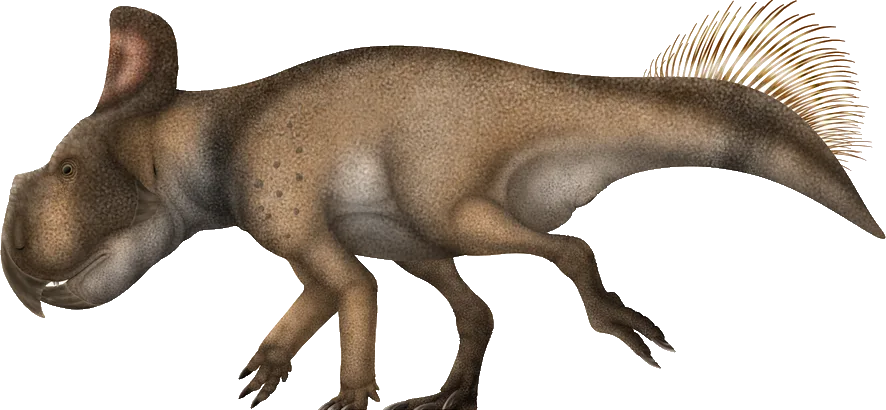
Protoceratops
CeratopsianLate CretaceousHerbivore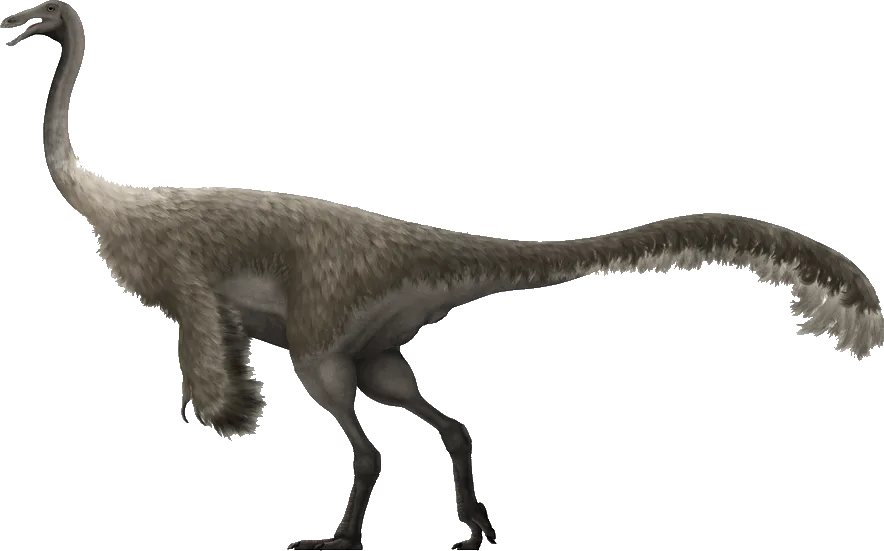
Gallimimus
TheropodLate CretaceousOmnivore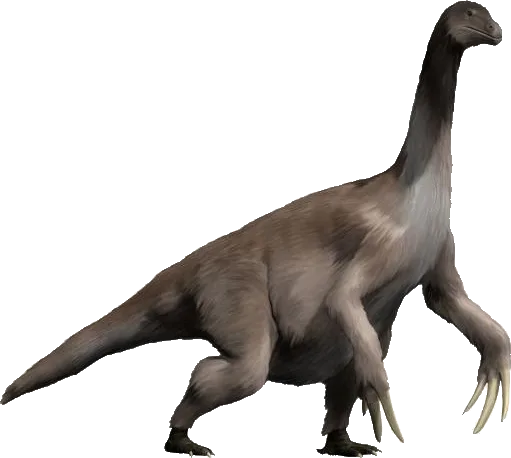
Therizinosaurus
TheropodLate CretaceousHerbivore
Sources
Media on this page
- Oviraptor Restoration.png — PaleoNeolitic · CC BY 4.0
- Fern in forest by I. Levitan (1895, N. Novgorod).jpg — Isaac Levitan · Public domain
- Oviraptor 3D model, shaped from the life reconstruction "Oviraptor Restoration.png" — PaleoNeolitic (artwork); 3D shaping by DinoVerse · CC BY 4.0
- Oviraptor reconstructed call (synthesised) — DinoVerse (synthesised) · CC0 1.0
- Oviraptor holotype.jpg — Internet Archive Book Images · Public domain
- Oviraptor-philoceratops-skull.jpg — Jaime A. Headden · CC BY 3.0
- Oviraptor Restoration.png — PaleoNeolitic · CC BY 4.0
- Oviraptor Skeletal.png — Iofry · CC BY-SA 4.0