DinoVerse · Dinosaur fact sheet
Oviraptor
Say it: OH-vih-RAP-tor · Name means: “Egg thief”
| ⏳ Lived | 75–71 million years ago Late Cretaceous |
|---|---|
| 🍽️ Diet | Omnivore (eats plants and meat) |
| 📏 Length | 1.5–2 m (5–7 ft) |
| ↕️ Height | 0.6–0.9 m (2–3 ft) |
| ⚖️ Weight | 30–40 kg (70–90 lb) |
| 📍 Found in | Asia |
| 🔎 Discovered | 1923 by George Olsen (American Museum of Natural History expedition) |
About Oviraptor
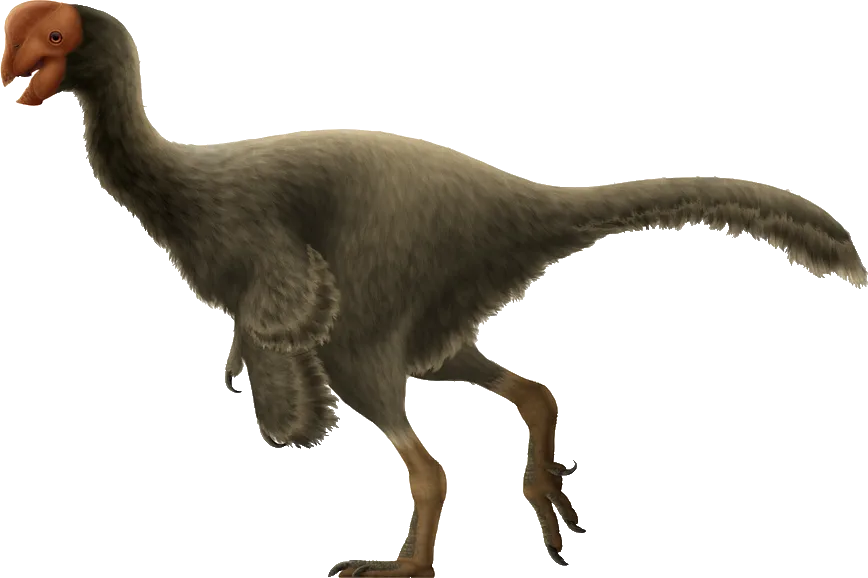
Oviraptor was a feathered dinosaur with a beak like a parrot. Scientists once thought it stole eggs, but it was actually looking after its own.
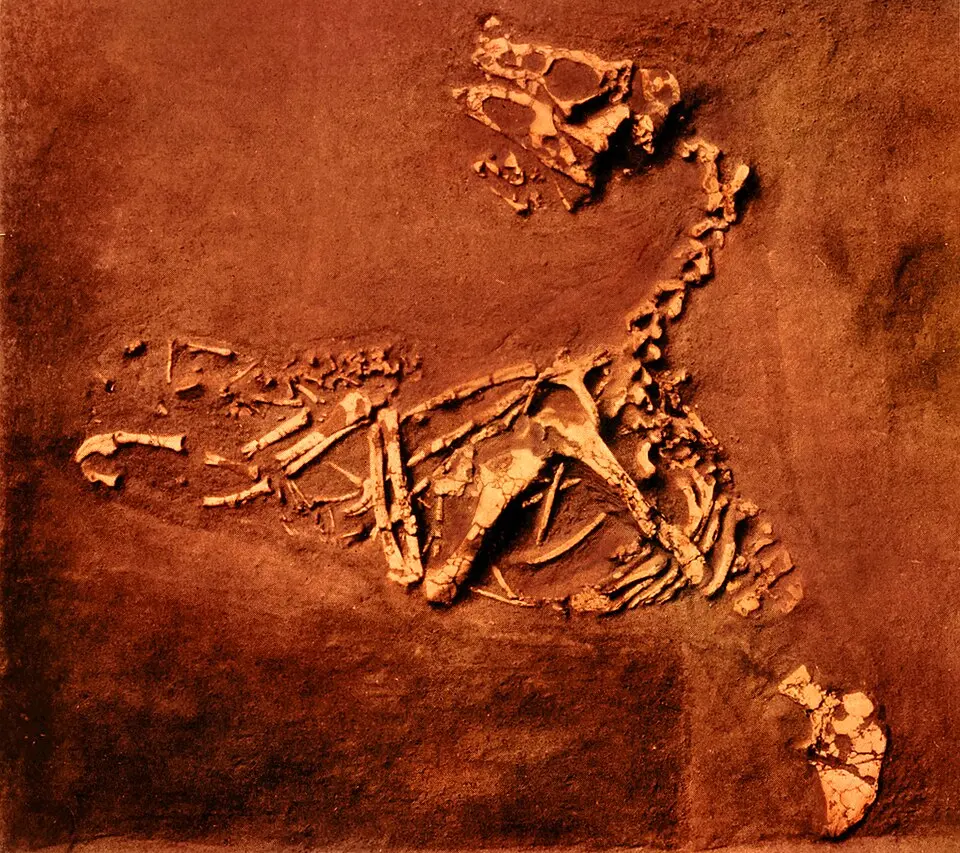
Oviraptor philoceratops was a beaked, feathered oviraptorid from the Late Cretaceous of Mongolia. Its name, 'egg thief', comes from being found on top of a nest that was later shown to belong to its own kind, and related fossils reveal that oviraptorids brooded their eggs like birds.
How big was it?
Drawn to scale next to a 1.7 m adult and a 12 m school bus.
Did you know?
- Oviraptor's name means 'egg thief', but it was really a good parent!
- It had no teeth, just a strong beak like a parrot's.
- Its relatives sat on their nests to keep their eggs warm, just like birds do.
- Inside the first Oviraptor fossil, scientists found the bones of a little lizard it had eaten.
- The first Oviraptor was found in 1923 lying on a nest of eggs that were assumed to belong to Protoceratops, so it was named 'egg thief, lover of ceratopsians'.
- In the 1990s an embryo of the close relative Citipati was found inside an identical egg, proving the eggs were oviraptorid and the adults were guarding or brooding them.
- Several oviraptorid skeletons have been found sitting on nests with arms spread over the eggs, a posture that strongly suggests feathered wings shielding the clutch.
- The original skull is damaged, so the size and shape of Oviraptor's head crest is uncertain; reconstructions often borrow from tall-crested relatives like Citipati.