Stegoceras
Name means “Roof horn”
Stegoceras was a small dome-headed dinosaur about the size of a big dog. It had a rounded, thick bony top to its head.
Stegoceras validum was a small pachycephalosaurid from the Late Campanian of Alberta, and one of the best-known dome-headed dinosaurs thanks to a nearly complete skull and partial skeleton. Its thickened skull roof has made it a key species in the debate over whether pachycephalosaurs butted heads.
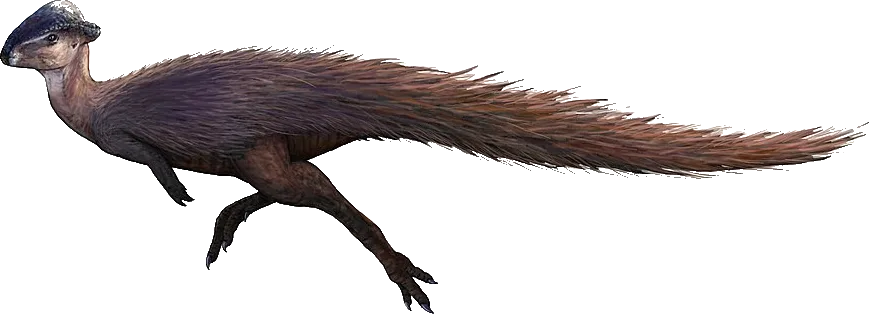
Stegoceras validum.jpg — FunkMonk · CC BY-SA 4.0
Pictures
Spin it in 3D
3D model description: a 3D model of Stegoceras shaped from a scientific life reconstruction painting, with the painting's colours and skin texture wrapped around it. It is not a scan of a real fossil.
About this model
This model is shaped from a scientific life reconstruction by FunkMonk: the painting's outline gives the 3D body and the painting itself is its skin. It is sized to the real animal's length (about 2.3 m), so in AR it appears life-size!
It looks best from the side, like the painting it comes from. It is not a fossil scan — museums such as the Smithsonian 3D collection share real fossil scans you can explore.
What might it sound like?
Transcript: Quick, higher-pitched grunting chirr, about 1.5 seconds long
🤔 Nobody knows exactly how dinosaurs sounded
This is a scientific guess. Stegoceras was small, so its voice was probably higher than big dinosaurs'. It had no hollow crest, so it likely made simple grunts or closed-mouth calls like some birds and crocodiles.
Voice boxes and soft tissue almost never fossilise, so sound reconstructions use clues: body size (bigger animals make lower sounds), the calls of living relatives (crocodiles boom with closed mouths; birds coo and hiss), and hollow structures such as hadrosaur crests that could have worked like a trumpet.
Sound: synthesised by DinoVerse from these scientific ideas (CC0). It is a creative guess, not a recording.
Food and habits
Herbivore
Plant-eater
How it ate
Picked leaves, seeds and fruit with a narrow beak and sliced them with small, serrated, leaf-shaped teeth; it fed close to the ground on low plants.
🔍 How do we know?
- small serrated leaf-shaped teeth
- tooth wear
- narrow snout for selective feeding
It ate…
- Leaves of flowering shrubs
- Seeds and fruits
- Ferns
- Low conifers
Stegoceras
…and was eaten by
- Gorgosaurus
- Daspletosaurus
- Saurornitholestes
Arrows show energy moving up the food chain: from food to eater.
Watch it walk
Quick facts
| 📏 Length | 2–2.5 m (7–8 ft) |
|---|---|
| ↕️ Height | 0.6–0.9 m (2–3 ft) |
| ⚖️ Weight | 10–40 kg (20–90 lb) |
| ⏳ When it lived | 77.5–74 million years ago (Late Cretaceous) |
| 📍 Fossils found | Dinosaur Provincial Park, Alberta, Canada; Oldman Formation, southern Alberta, Canada |
| 🔎 Discovered | 1902 by Lawrence Lambe |
| 🧬 Group | Pachycephalosaurs — Ornithischia › Marginocephalia › Pachycephalosauria |
Where scientists disagree, we show a range. Sizes are for adults.
How big was it?
Where and when
- 📍 Dinosaur Provincial Park, Alberta, Canada (North America)
- 📍 Oldman Formation, southern Alberta, Canada (North America)
Lived 77.5–74 million years ago
That's about 76 million years before you were born! Humans have only existed for about 0.3 million years.
See it on the big timeline →Did you know?
- 1Stegoceras was only about as heavy as a big dog!
- 2Its head had a smooth, thick dome of bone, a bit like a built-in helmet.
- 3The scientist who first found its dome thought it was a horn from a dinosaur's nose.
- 4It ran around on two legs and ate plants.
- Lawrence Lambe named Stegoceras in 1902 from isolated domes; unsure what they were, he suggested they sat in front of the nose, and the idea of a 'unicorn dinosaur' was briefly floated.
- In 1924 Charles Gilmore merged Stegoceras with Troodon because their teeth looked similar; later work showed Troodon was a theropod, and the two were separated again.
- Computer models of its skull bone (2008) suggest the dome could withstand head-butting impacts, but whether it butted heads, flanks or simply displayed its dome is still debated.
- Domes from juveniles are flatter, showing that the dome grew taller and thicker with age.
Myth vs fact
❌ MythStegoceras's dome was a horn on its nose.
✅ FactIts first discoverer only had loose domes and wondered if they were nose horns. A complete skull later showed the dome was the roof of the skull.
❌ MythDome-headed dinosaurs definitely charged head-first like rams.
✅ FactScientists still debate how they used their domes. They may have butted each other's sides, used the dome for display, or both.
Mini quiz
1. About how heavy was Stegoceras?
2. In which country was Stegoceras found?
3. What did Lambe first think Stegoceras's dome might be?
Related animals
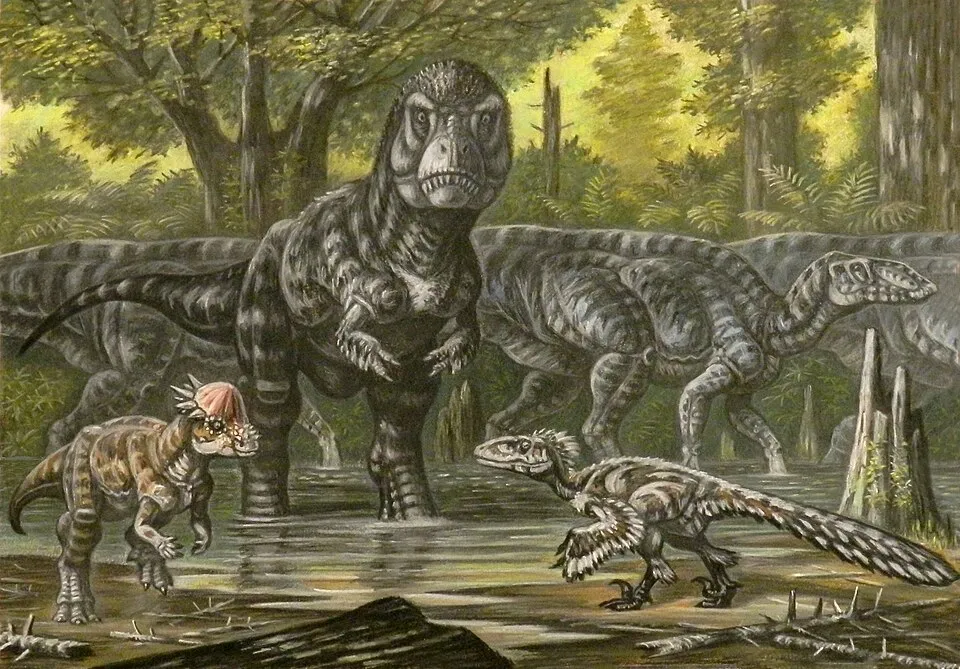
Pachycephalosaurus
PachycephalosaurLate CretaceousHerbivore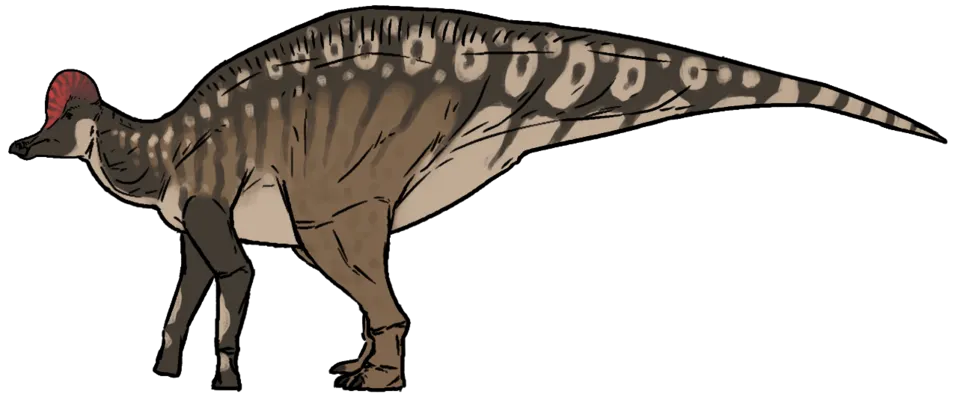
Corythosaurus
OrnithopodLate CretaceousHerbivore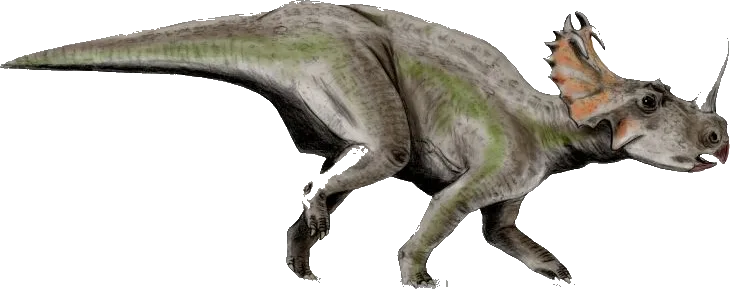
Centrosaurus
CeratopsianLate CretaceousHerbivore
Sources
Media on this page
- Stegoceras validum.jpg — FunkMonk · CC BY-SA 4.0
- Fern in forest by I. Levitan (1895, N. Novgorod).jpg — Isaac Levitan · Public domain
- Stegoceras 3D model, shaped from the life reconstruction "Stegoceras validum.jpg" — FunkMonk (artwork); 3D shaping by DinoVerse · CC BY-SA 4.0
- Stegoceras reconstructed call (synthesised) — DinoVerse (synthesised) · CC0 1.0
- Royal Tyrrell Museum Stegoceras.jpg — Cherrysweetdeal · CC BY 2.0
- 1924 Gilmore Stegoceras.jpg — Charles Gilmore · Public domain
- Dorsal and caudal vertebrae of Stegoceras.jpg — Charles Gilmore, tooth by Joseph Leidy · Public domain
- Frontoparietal variation in adult Stegoceras.jpg — Aaron D. Dyer, Mark J. Powers, and and Philip J. Currie · CC BY 4.0