Maiasaura
Name means “Good mother lizard”
Maiasaura was a duck-billed dinosaur that built nests and looked after its babies. Its name means 'good mother lizard'.
Maiasaura peeblesorum was a saurolophine hadrosaurid from the Campanian Two Medicine Formation of Montana. Nesting colonies with eggs, hatchlings and juveniles provided some of the first strong evidence that dinosaurs cared for their young.
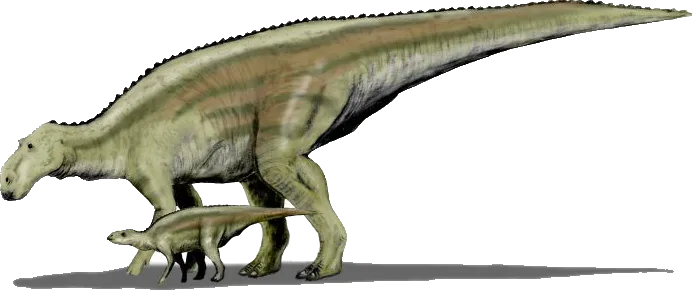
Maiasaura BW.jpg — Nobu Tamura (http://spinops.blogspot.com) · CC BY 3.0
Pictures
Spin it in 3D
3D model description: a 3D model of Maiasaura shaped from a scientific life reconstruction painting, with the painting's colours and skin texture wrapped around it. It is not a scan of a real fossil.
About this model
This model is shaped from a scientific life reconstruction by Nobu Tamura (http://spinops.blogspot.com): the painting's outline gives the 3D body and the painting itself is its skin. It is sized to the real animal's length (about 8.0 m), so in AR it appears life-size!
It looks best from the side, like the painting it comes from. It is not a fossil scan — museums such as the Smithsonian 3D collection share real fossil scans you can explore.
What might it sound like?
Transcript: Soft, low mooing bellow, about 3 seconds long
🤔 Nobody knows exactly how dinosaurs sounded
This is a scientific guess. Maiasaura had only a small solid crest, not a hollow tube, so its calls were probably simpler than those of crested duck-bills. Like birds and crocodiles, it may have called with its mouth closed, and its babies may have peeped to their parents.
Voice boxes and soft tissue almost never fossilise, so sound reconstructions use clues: body size (bigger animals make lower sounds), the calls of living relatives (crocodiles boom with closed mouths; birds coo and hiss), and hollow structures such as hadrosaur crests that could have worked like a trumpet.
Sound: synthesised by DinoVerse from these scientific ideas (CC0). It is a creative guess, not a recording.
Food and habits
Herbivore
Plant-eater
How it ate
Cropped plants with a wide, toothless beak and ground them down with dental batteries of hundreds of packed teeth; adults may have brought food to babies in the nest.
🔍 How do we know?
- dental batteries with grinding surfaces
- tooth wear
- coprolites full of decayed conifer wood from the same rock layers
- worn teeth in nestlings, hinting they were already eating plants
It ate…
- Conifer leaves and rotting conifer wood
- Flowering shrubs
- Ferns
- Horsetails
Maiasaura
…and was eaten by
- Daspletosaurus
- Troodontids (eggs and babies)
Arrows show energy moving up the food chain: from food to eater.
Watch it feed
Quick facts
| 📏 Length | 7–9 m (23–30 ft) |
|---|---|
| ↕️ Height | 2–2.5 m (7–8 ft) |
| ⚖️ Weight | 2,500–4,000 kg (5,510–8,820 lb) |
| ⏳ When it lived | 77–75 million years ago (Late Cretaceous) |
| 📍 Fossils found | Egg Mountain, near Choteau, Montana, USA; Two Medicine Formation, Glacier County, Montana, USA; Oldman Formation, Alberta, Canada |
| 🔎 Discovered | 1978 by Marion Brandvold (named by Jack Horner and Robert Makela, 1979) |
| 🧬 Group | Ornithopods — Ornithischia › Neornithischia › Ornithopoda |
Where scientists disagree, we show a range. Sizes are for adults.
How big was it?
Where and when
- 📍 Egg Mountain, near Choteau, Montana, USA (North America)
- 📍 Two Medicine Formation, Glacier County, Montana, USA (North America)
- 📍 Oldman Formation, Alberta, Canada (North America)
Lived 77–75 million years ago
That's about 76 million years before you were born! Humans have only existed for about 0.3 million years.
See it on the big timeline →Did you know?
- 1Maiasaura made nests out of mud and laid about 30 to 40 eggs in each one!
- 2Its babies were small enough to fit in your arms, but grew to the length of a bus.
- 3The nests were built close together, like a big dinosaur neighbourhood.
- 4A piece of Maiasaura bone and eggshell was taken into space by an astronaut in 1985!
- Nests at Egg Mountain were spaced about 7 m apart, less than an adult's body length, similar to colonies of modern seabirds.
- Hatchlings had poorly formed leg joints and worn teeth, which Horner and Makela interpreted as evidence that babies stayed in the nest and were fed by parents; some researchers think the worn teeth could have formed before hatching.
- A 2015 study of 50 shin bones found that Maiasaura grew very fast as youngsters and that about 90% died in their first year; survivors faced much lower risk until death rates rose again from about age eight.
- Bonebeds in the Two Medicine Formation suggest herds of thousands, with one estimate of up to 10,000 animals buried together, possibly after a volcanic ash event.
Myth vs fact
❌ MythAll dinosaurs laid their eggs and walked away, like turtles.
✅ FactMaiasaura nesting grounds, with babies of different ages still in and around nests, show that at least some dinosaurs cared for their young.
❌ MythDuck-billed dinosaurs lived mainly in water.
✅ FactMaiasaura nested on dry upland ground and ate tough land plants, including rotting wood.
Mini quiz
1. What does 'Maiasaura' mean?
2. What did Maiasaura build for its eggs?
3. In which US state was Maiasaura discovered?
Related animals
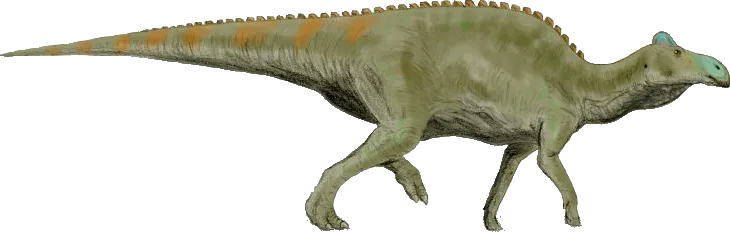
Edmontosaurus
OrnithopodLate CretaceousHerbivore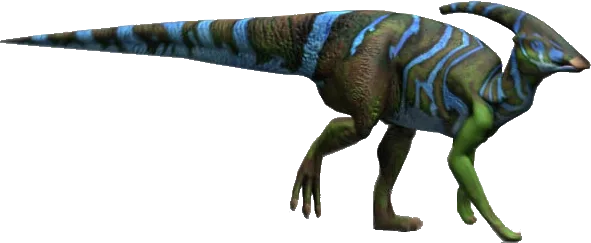
Parasaurolophus
OrnithopodLate CretaceousHerbivore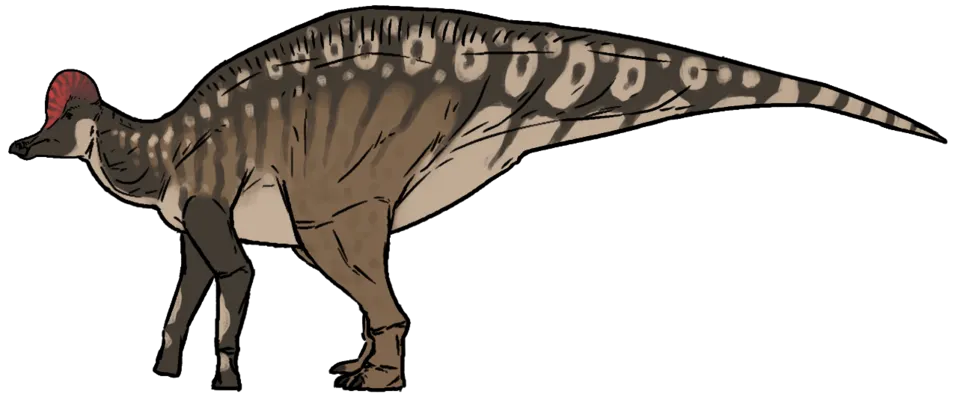
Corythosaurus
OrnithopodLate CretaceousHerbivore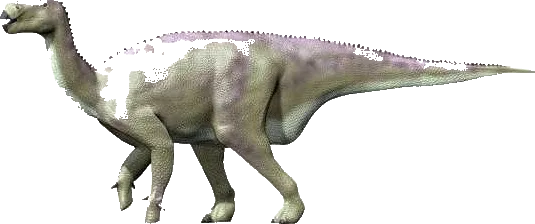
Iguanodon
OrnithopodEarly CretaceousHerbivore
Sources
Media on this page
- Maiasaura BW.jpg — Nobu Tamura (http://spinops.blogspot.com) · CC BY 3.0
- Fern in forest by I. Levitan (1895, N. Novgorod).jpg — Isaac Levitan · Public domain
- Maiasaura 3D model, shaped from the life reconstruction "Maiasaura BW.jpg" — Nobu Tamura (http://spinops.blogspot.com) (artwork); 3D shaping by DinoVerse · CC BY 3.0
- Maiasaura reconstructed call (synthesised) — DinoVerse (synthesised) · CC0 1.0
- Maiasaura skeleton.jpg — Meridas (Vladimír Socha) · CC BY-SA 4.0
- Maiasaur Pano-v1.jpg — Original uploader was Debivort at en.wikipedia · CC BY-SA 3.0
- MaiasauraBabies.jpg — LittleLazyLass · CC BY 4.0
- Maiasaura BW.jpg — Nobu Tamura (http://spinops.blogspot.com) · CC BY 3.0