Edmontosaurus
Name means “Edmonton lizard”
Edmontosaurus was a big duck-billed dinosaur that lived in herds. It was one of T. rex's favourite meals!
Edmontosaurus was a large, crestless saurolophine hadrosaurid from the end of the Cretaceous in western North America, ranging from Colorado to Arctic Alaska. Exceptional 'mummy' fossils preserve its skin, beak and hooves, making it one of the best-understood dinosaurs.
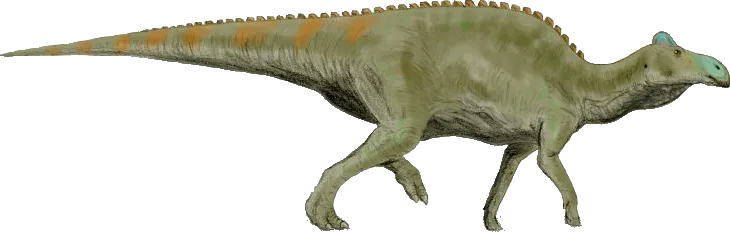
Edmontosaurus BW.jpg — Nobu Tamura (http://spinops.blogspot.com) · CC BY 2.5
Pictures
Spin it in 3D
3D model description: a 3D model of Edmontosaurus shaped from a scientific life reconstruction painting, with the painting's colours and skin texture wrapped around it. It is not a scan of a real fossil.
About this model
This model is shaped from a scientific life reconstruction by Nobu Tamura (http://spinops.blogspot.com): the painting's outline gives the 3D body and the painting itself is its skin. It is sized to the real animal's length (about 10.5 m), so in AR it appears life-size!
It looks best from the side, like the painting it comes from. It is not a fossil scan — museums such as the Smithsonian 3D collection share real fossil scans you can explore.
What might it sound like?
Transcript: Deep, nasal bellowing call, about 3 seconds long
🤔 Nobody knows exactly how dinosaurs sounded
Edmontosaurus had no hollow crest, so scientists can only guess its voice. Deep hollows around its nostrils may have held inflatable skin sacs that helped it make or boost calls, and like its relatives, birds and crocodiles, it probably made low, closed-mouth sounds.
Voice boxes and soft tissue almost never fossilise, so sound reconstructions use clues: body size (bigger animals make lower sounds), the calls of living relatives (crocodiles boom with closed mouths; birds coo and hiss), and hollow structures such as hadrosaur crests that could have worked like a trumpet.
Sound: synthesised by DinoVerse from these scientific ideas (CC0). It is a creative guess, not a recording.
Food and habits
Herbivore
Plant-eater
How it ate
Cropped plants with a broad, duck-like beak, then chewed them thoroughly with dental batteries of up to hundreds of teeth, grinding food with a sideways sliding motion of the jaws.
🔍 How do we know?
- dental batteries with grinding surfaces
- tooth microwear suggesting low, gritty plants such as horsetails
- possible stomach contents of conifer needles, twigs and seeds in a 'mummy'
- healed T. rex bite marks on its bones
It ate…
- Conifer needles and twigs
- Horsetails
- Flowering plants
- Seeds and fruits
Edmontosaurus
…and was eaten by
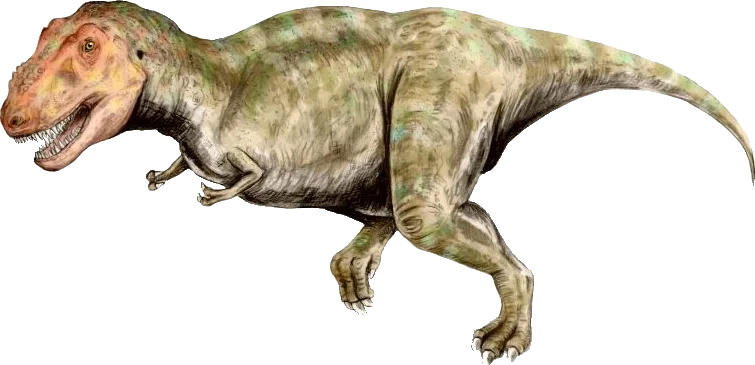 Tyrannosaurus rex
- Albertosaurus
- Daspletosaurus
Arrows show energy moving up the food chain: from food to eater.
Watch it feed
Quick facts
| 📏 Length | 9–12 m (30–39 ft) |
|---|---|
| ↕️ Height | 3–3.5 m (10–11 ft) |
| ⚖️ Weight | 3,500–7,000 kg (7,720–15,430 lb) |
| ⏳ When it lived | 73–66 million years ago (Late Cretaceous) |
| 📍 Fossils found | Horseshoe Canyon Formation, Alberta, Canada; Hell Creek Formation, Montana, USA; Lance Formation, Wyoming, USA; Prince Creek Formation, North Slope, Alaska, USA |
| 🔎 Discovered | 1917 by Lawrence Lambe |
| 🧬 Group | Ornithopods — Ornithischia › Neornithischia › Ornithopoda |
Where scientists disagree, we show a range. Sizes are for adults.
How big was it?
Where and when
- 📍 Horseshoe Canyon Formation, Alberta, Canada (North America)
- 📍 Hell Creek Formation, Montana, USA (North America)
- 📍 Lance Formation, Wyoming, USA (North America)
- 📍 Prince Creek Formation, North Slope, Alaska, USA (North America)
Lived 73–66 million years ago
That's about 70 million years before you were born! Humans have only existed for about 0.3 million years.
See it on the big timeline →Did you know?
- 1Edmontosaurus had hundreds of teeth packed in its mouth, and it grew new ones all the time!
- 2Some Edmontosaurus fossils are 'mummies' that still show the shape of its scaly skin.
- 3One Edmontosaurus escaped a bite from a big meat-eater, probably a T. rex, and its tail bones healed afterwards.
- 4Herds of Edmontosaurus even lived in Alaska, where winters were dark and chilly.
- Tooth microwear studies suggest Edmontosaurus mostly grazed or browsed on low plants such as horsetails, and its jaws chewed with a grinding, sideways motion rarely seen in reptiles.
- An Edmontosaurus skeleton at the Denver Museum of Nature and Science has a healed bite wound on its tail that most researchers attribute to T. rex, evidence that it attacked living prey and not only scavenged.
- Mummified specimens from Wyoming preserve scaly skin, remains of the keratin beak, mitten-like padded hands and hoof-like tips on the toes.
- Huge bonebeds suggest it lived in large groups; whether herds, including those living in Arctic Alaska, migrated with the seasons or stayed put is still debated.
Myth vs fact
❌ MythDuck-billed dinosaurs like Edmontosaurus lived in lakes and ate soft water plants.
✅ FactIts hoof-like feet, grinding teeth and possible stomach contents of conifer needles and twigs show it was a land animal that ate tough plants.
❌ MythIts 'webbed' hands meant it was a swimmer.
✅ FactThe skin on its hands formed a mitten-like pad for walking, not a paddle.
Mini quiz
1. What kind of mouth did Edmontosaurus have?
2. Which predator is known to have bitten a living Edmontosaurus?
3. What are special Edmontosaurus fossils that show skin called?
Related animals
Tyrannosaurus rex
TheropodLate CretaceousCarnivore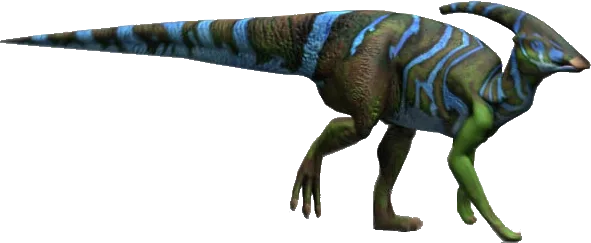
Parasaurolophus
OrnithopodLate CretaceousHerbivore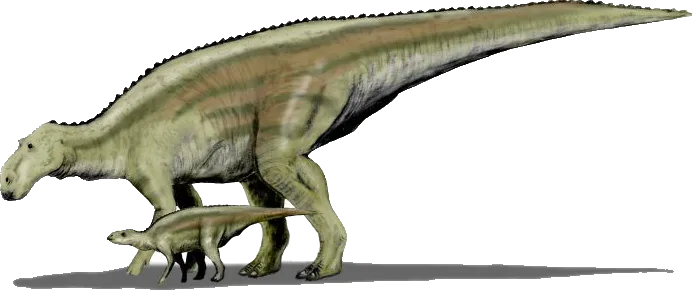
Maiasaura
OrnithopodLate CretaceousHerbivore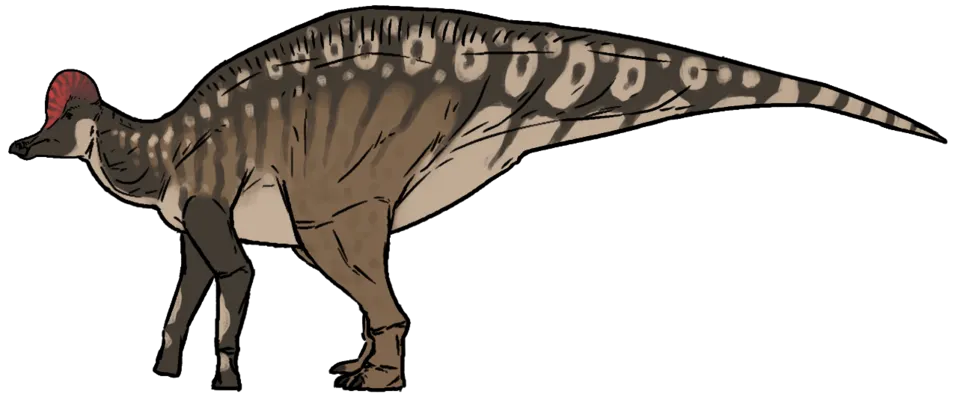
Corythosaurus
OrnithopodLate CretaceousHerbivore
Sources
Media on this page
- Edmontosaurus BW.jpg — Nobu Tamura (http://spinops.blogspot.com) · CC BY 2.5
- Fern in forest by I. Levitan (1895, N. Novgorod).jpg — Isaac Levitan · Public domain
- Edmontosaurus 3D model, shaped from the life reconstruction "Edmontosaurus BW.jpg" — Nobu Tamura (http://spinops.blogspot.com) (artwork); 3D shaping by DinoVerse · CC BY 2.5
- Edmontosaurus reconstructed call (synthesised) — DinoVerse (synthesised) · CC0 1.0
- Edmontosaurus Family Clean.png — MCDinosaurhunter · CC BY-SA 3.0
- Edmontosaurus & Tyrannosaurus HMNS.jpg — Jean Doremus Edwards from Houston, USA · CC BY 2.0
- Edmontosaurus AMNH 5060 manus.png — Henry Fairfield Osborn · CC0
- Edmontosaurus NDGS 2000 right manus.png — Stephanie K. Drumheller, Clint A. Boyd, Becky M. S. Barnes & Mindy L. Householder · CC BY 4.0