Synapsids
Early cousins of mammals
Amniota › Synapsida
🚫 Not dinosaurs
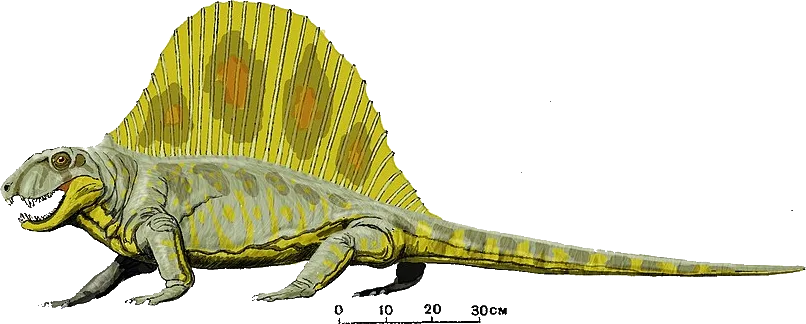
Synapsids are the big family that mammals belong to. Early synapsids, like sail-backed Dimetrodon, lived even before the dinosaurs. Dimetrodon looks like a reptile, but it is actually more closely related to you than to any dinosaur!
Synapsids are amniotes with a single opening (temporal fenestra) low on each side of the skull behind the eye, and they split from the reptile line more than 310 million years ago in the Carboniferous. Early synapsids, once misleadingly called "mammal-like reptiles", include Dimetrodon, a sail-backed predator of the Early Permian about 295–272 million years ago, long before the first dinosaurs. Dimetrodon already had differently shaped teeth, including large canine-like fangs, a hint of the mammal pattern. Later synapsids, the therapsids and then cynodonts, gradually gained more upright legs, a more efficient jaw and probably warm-bloodedness, and one cynodont branch gave rise to mammals.
How to spot one
- One opening in the skull behind each eye
- Legs that sprawled out to the sides (in early kinds)
- Teeth of different shapes in the same mouth
- Some, like Dimetrodon, had a tall sail on the back