Mosasaurs
Giant sea lizards
Squamata › Mosasauria › Mosasauridae
🚫 Not dinosaurs
Mosasaurs were huge sea lizards with strong tails and sharp teeth. They are related to today’s lizards and snakes, not to dinosaurs. The biggest mosasaurs were as long as a bus!
Mosasaurs are squamates, the group that includes lizards and snakes, and they are probably closest to monitor lizards or snakes, though the exact relationship is still debated. They appeared about 98 million years ago and quickly became the top marine predators of the Late Cretaceous before vanishing in the extinction 66 million years ago. Mosasaurs had a flexible jaw joint and a second set of teeth on the pterygoid bones in the roof of the mouth, helping them swallow large prey. Fossils of Prognathodon and others show a downturned tail with a fluke, and the largest genera, Mosasaurus and Tylosaurus, reached about 12–17 metres. The first Mosasaurus fossil, found near Maastricht in the Netherlands in the 1770s, helped convince scientists that species could go extinct.
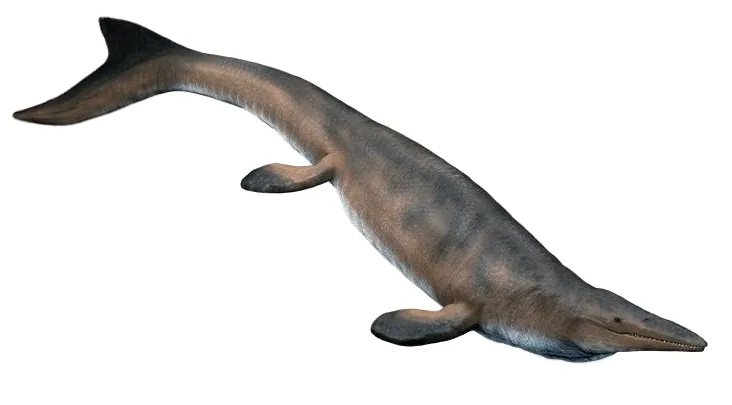
How to spot one
- Long body with a tail fin shaped like a shark’s
- Four paddle-like flippers
- Extra teeth on the roof of the mouth for gripping prey
- A bendy jaw that could open very wide