DinoVerse · Dinosaur fact sheet
Therizinosaurus
Say it: THER-ih-ZIN-oh-SORE-us · Name means: “Scythe lizard”
| ⏳ Lived | 71–69 million years ago Late Cretaceous |
|---|---|
| 🌿 Diet | Herbivore (plant-eater) |
| 📏 Length | 9–10 m (30–33 ft) |
| ↕️ Height | 3.5–5 m (11–16 ft) |
| ⚖️ Weight | 3,000–5,000 kg (6,610–11,020 lb) |
| 📍 Found in | Asia |
| 🔎 Discovered | 1948 by Soviet-Mongolian expedition (named by Evgeny Maleev in 1954) |
About Therizinosaurus
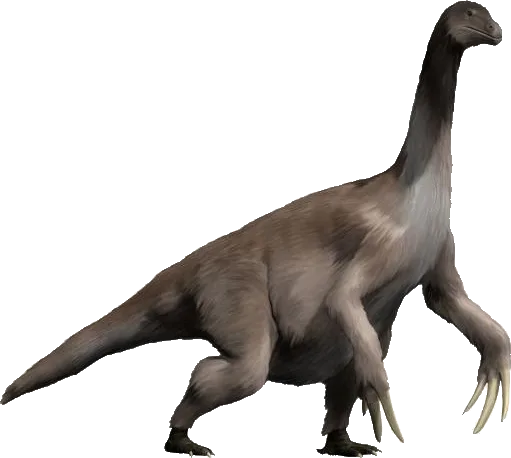
Therizinosaurus was a giant, feathery plant-eater with the longest claws of any known animal. It was a theropod, but it ate leaves instead of meat.
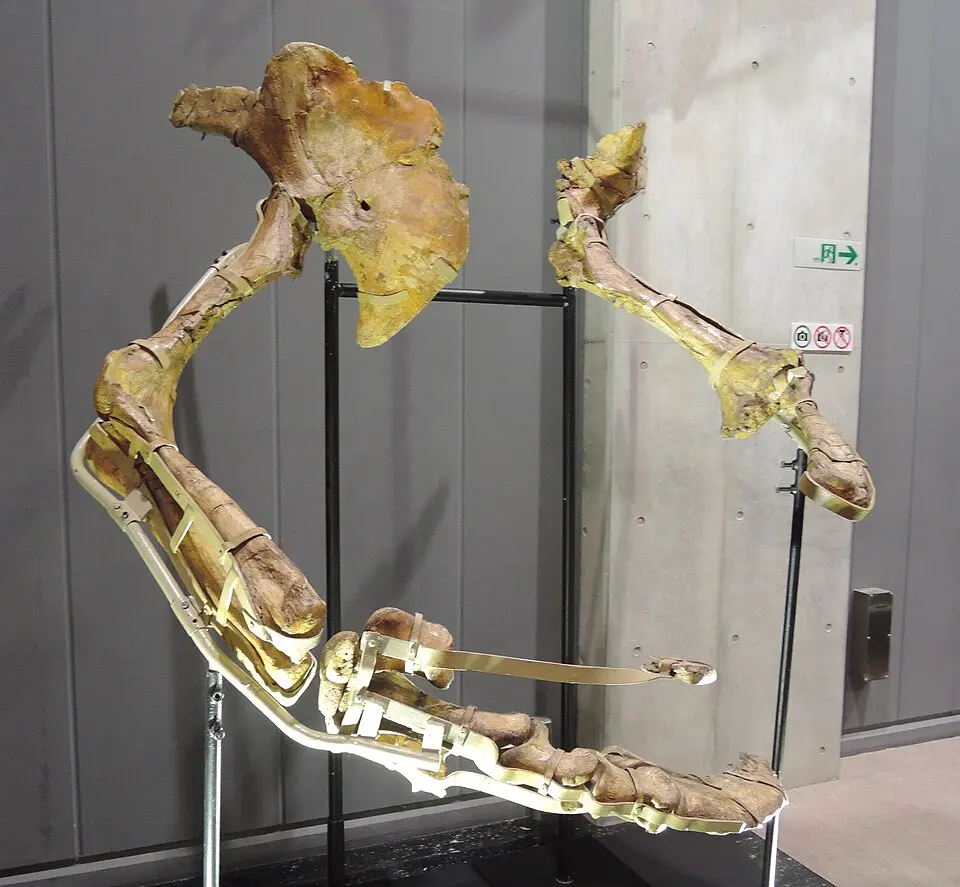
Therizinosaurus cheloniformis was a giant therizinosaurid from the Late Cretaceous of Mongolia, one of the largest members of an unusual group of plant-eating theropods. It is famous for hand claws with bony cores over half a metre long, but because its skull has never been found, much of its appearance is reconstructed from smaller relatives.
How big was it?
Drawn to scale next to a 1.7 m adult and a 12 m school bus.
Did you know?
- Therizinosaurus had claws longer than your arm, the longest claws of any animal ever found!
- Even though it was related to T. rex, it ate plants.
- When scientists first found its claws, they thought they came from a giant turtle.
- Nobody has ever found its head, so scientists guess what it looked like from its cousins.
- When the first claws were described in 1954 by Evgeny Maleev, he thought they belonged to a huge turtle-like reptile, which is why its species name cheloniformis means 'turtle-shaped'.
- The bony claw cores reach more than 50 centimetres, and in life they were covered by an even longer keratin sheath.
- A 2023 study comparing claw shapes suggested Therizinosaurus's claws were poorly suited to digging or fighting and were more likely used for pulling vegetation and display.
- Smaller relatives such as Beipiaosaurus and Erlikosaurus show that therizinosaurs had beaks, leaf-shaped teeth and simple feathers, so Therizinosaurus was likely similar.