DinoVerse · Dinosaur fact sheet
Rhamphorhynchus
Say it: RAM-foh-RINK-us · Name means: “Beak snout”
⚠️ Not a dinosaur: Rhamphorhynchus was a pterosaur, a flying reptile. Pterosaurs were close cousins of dinosaurs, but their legs did not sit straight under the body in the dinosaur way and they evolved on a separate branch.
| ⏳ Lived | 151–148 million years ago Late Jurassic |
|---|---|
| 🐟 Diet | Piscivore (fish-eater) |
| 📏 Wingspan | 0.8–1.8 m (3–6 ft) |
| ↕️ Height | 0.2–0.3 m (1 ft) |
| ⚖️ Weight | 0.5–2 kg (1.1–4.4 lb) |
| 📍 Found in | Europe |
| 🔎 Discovered | 1846 by Hermann von Meyer |
About Rhamphorhynchus
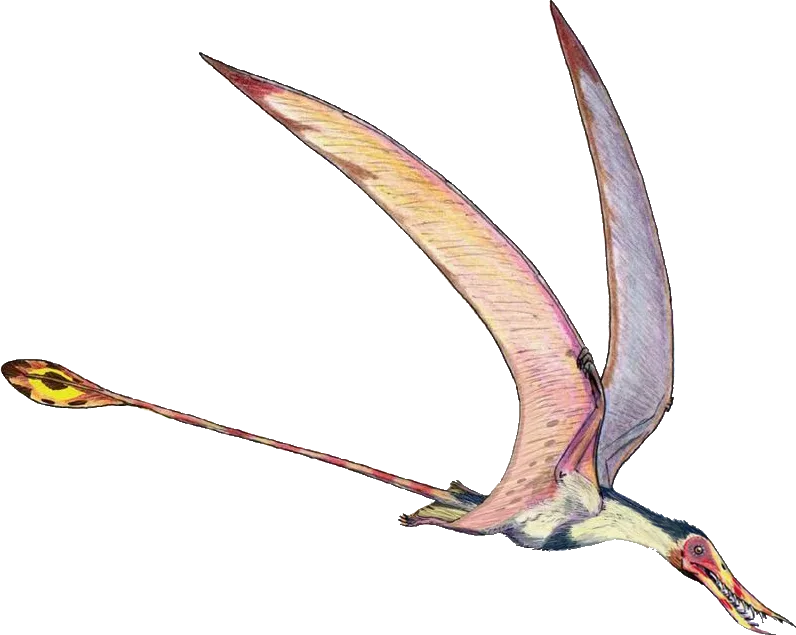
Rhamphorhynchus was a flying reptile with sharp teeth for catching fish and a long tail with a little diamond-shaped flag on the end. It was not a dinosaur!
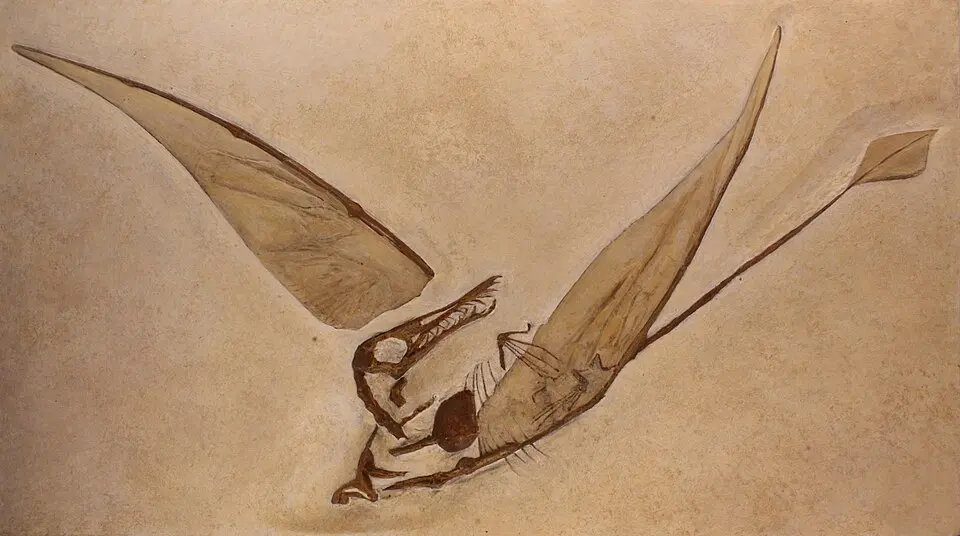
Rhamphorhynchus was a long-tailed pterosaur from the Late Jurassic Solnhofen lagoons of Germany. Hundreds of beautifully preserved specimens, some with wing membranes and stomach contents, make it one of the best-studied pterosaurs.
How big was it?
Drawn to scale next to a 1.7 m adult and a 12 m school bus (pterosaur size is wingspan).
Did you know?
- Rhamphorhynchus had a long tail with a diamond-shaped flap at the tip, like a kite tail!
- Its teeth pointed forward like a spiky fish trap.
- One fossil shows a Rhamphorhynchus that got caught by a big fish!
- Some fossils are so good you can see the shape of its skin wings.
- A famous Solnhofen slab preserves a Rhamphorhynchus tangled in the jaws of the large fish Aspidorhynchus, which may have grabbed it at the water's surface; both seem to have died and sunk together.
- Studies of growth stages showed that several 'species' of Rhamphorhynchus were really different ages of the same few species, with the tail vane changing shape as they grew.
- Specimens under ultraviolet light reveal details of the wing membrane, including stiffening fibres that helped control its shape.
- Its slow growth compared with birds suggests young Rhamphorhynchus may have been able to fly soon after hatching but took years to reach full size.