DinoVerse · Dinosaur fact sheet
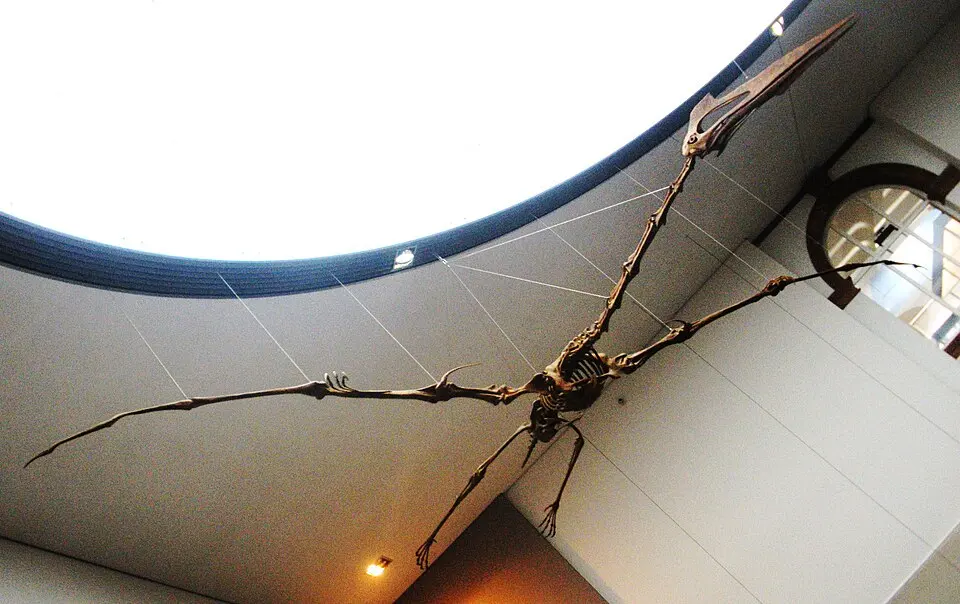
Quetzalcoatlus
Say it: KET-sal-koh-AT-lus · Name means: “Named after Quetzalcoatl, the feathered serpent god of the Aztecs”
⚠️ Not a dinosaur: Quetzalcoatlus was a pterosaur, a flying reptile. Pterosaurs were close cousins of dinosaurs, but their legs did not sit straight under the body in the dinosaur way and they evolved on a separate branch.
| ⏳ Lived | 68–66 million years ago Late Cretaceous |
|---|---|
| 🥩 Diet | Carnivore (meat-eater) |
| 📏 Wingspan | 10–11 m (33–36 ft) |
| ↕️ Height | 4.5–5 m (15–16 ft) |
| ⚖️ Weight | 200–250 kg (440–550 lb) |
| 📍 Found in | North America |
| 🔎 Discovered | 1971 by Douglas Lawson (named in 1975) |
About Quetzalcoatlus
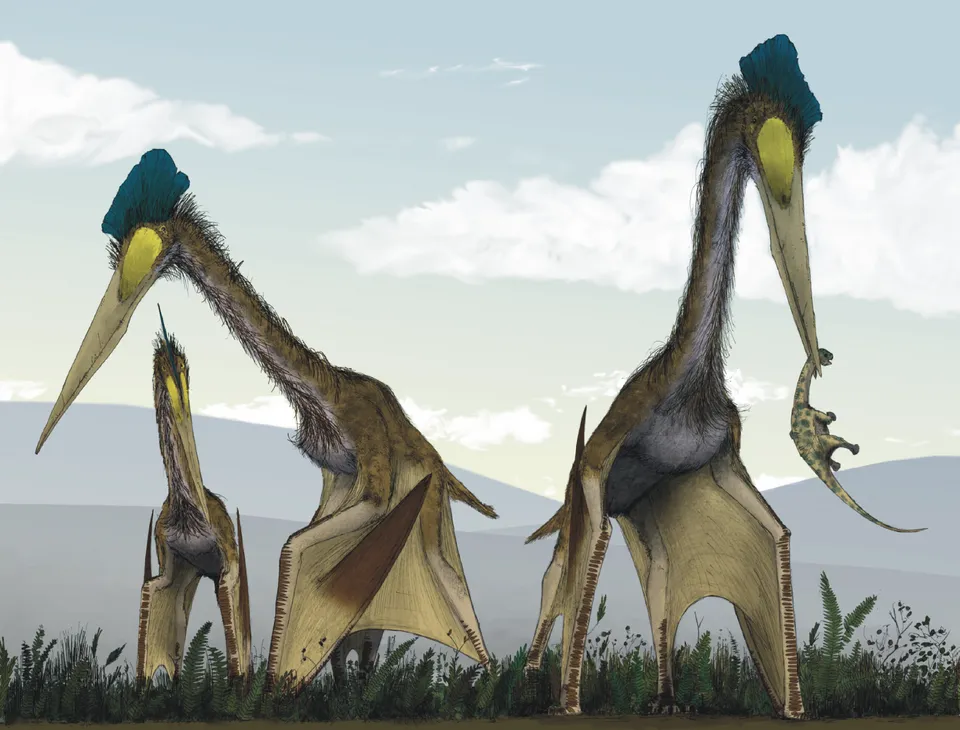
Quetzalcoatlus was one of the biggest flying animals ever, with wings as wide as a small plane. Standing up, it was as tall as a giraffe!
Quetzalcoatlus was an azhdarchid pterosaur from the end of the Cretaceous in Texas and one of the largest flying animals known, with a wingspan of roughly 10–11 m. Its long neck, stiff beak and long limbs suggest it hunted small animals on the ground.
How big was it?
Drawn to scale next to a 1.7 m adult and a 12 m school bus (pterosaur size is wingspan).
Did you know?
- When it stood on the ground, Quetzalcoatlus was as tall as a giraffe!
- Its wings were about as wide as a small airplane's.
- Even though it was huge, its bones were hollow, so it weighed about as much as two or three grown-ups.
- It probably walked around catching small animals, a bit like a giant stork.
- The 10–11 m figures are wingspan estimates; the type species, Q. northropi, is known from only a partial wing, so its size is scaled from the better-known smaller species, Q. lawsoni.
- Early ideas that it skimmed fish or scavenged like a vulture have mostly given way to 'terrestrial stalking', proposed by Witton and Naish in 2008, though a 2021 study suggested it may also have probed for prey in water or soft ground.
- A detailed 2021 description of Q. lawsoni argued it took off by leaping powerfully from the ground, and debate continues over whether the arms or the legs did most of the launch work.
- Its neck vertebrae are long, tube-like and internally braced, making the neck strong but not very flexible.