DinoVerse · Dinosaur fact sheet
Pteranodon
Say it: teh-RAN-oh-don · Name means: “Toothless wing”
⚠️ Not a dinosaur: Pteranodon was a pterosaur, a flying reptile. Pterosaurs were close cousins of dinosaurs, but their legs did not sit straight under the body in the dinosaur way and they evolved on a separate branch — so they are not dinosaurs and not the ancestors of birds.
| ⏳ Lived | 86–84 million years ago Late Cretaceous |
|---|---|
| 🐟 Diet | Piscivore (fish-eater) |
| 📏 Wingspan | 5–7 m (16–23 ft) |
| ↕️ Height | 1.5–1.8 m (5–6 ft) |
| ⚖️ Weight | 20–50 kg (40–110 lb) |
| 📍 Found in | North America |
| 🔎 Discovered | 1870 by Othniel Charles Marsh (named in 1876) |
About Pteranodon
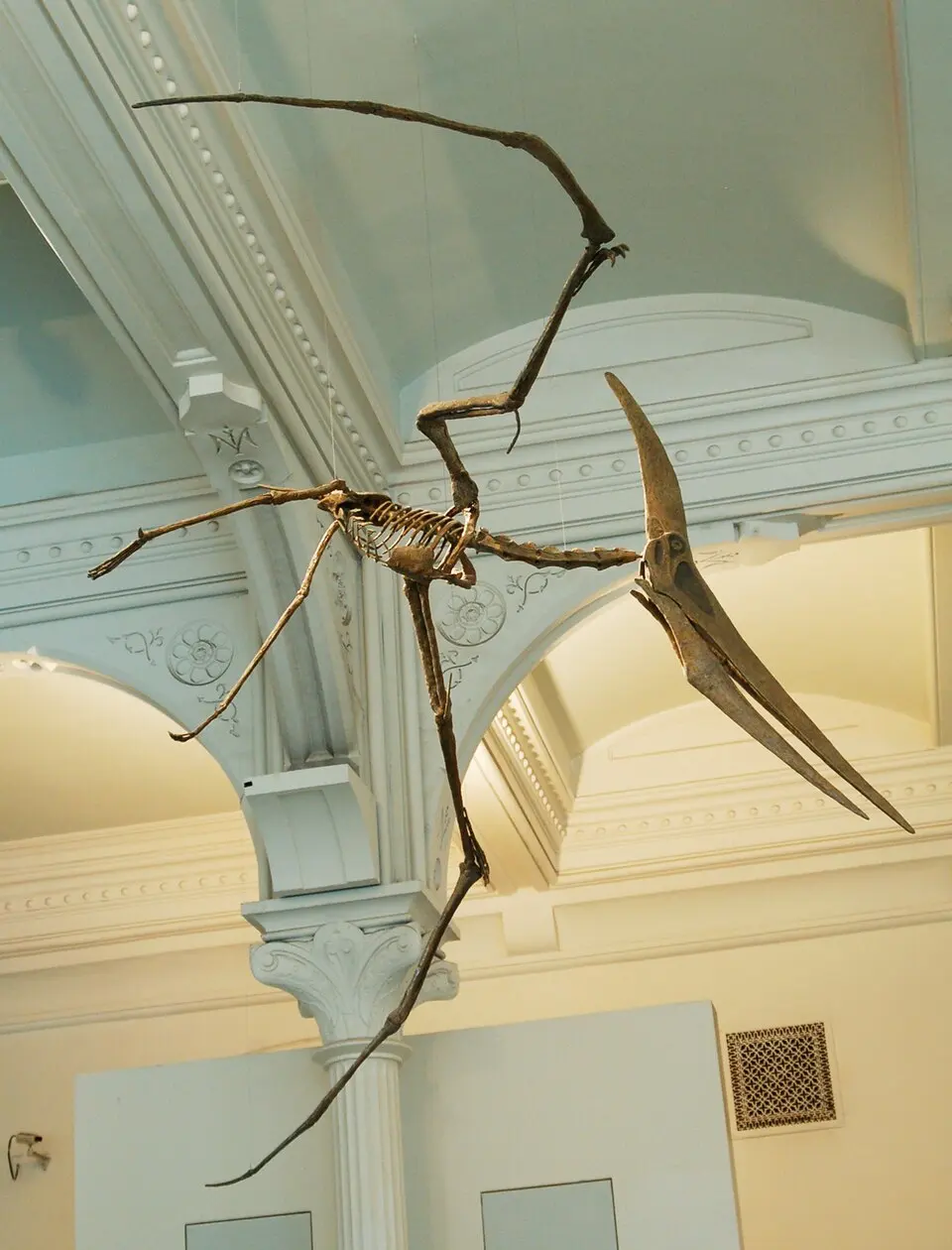
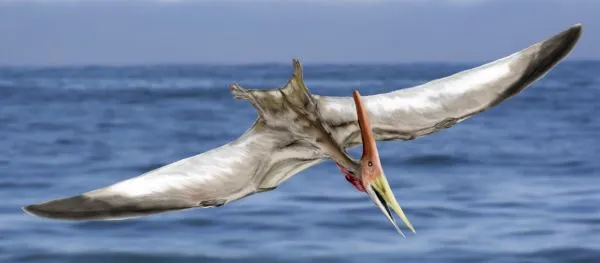
Pteranodon was a giant flying reptile with wings wider than a car is long and a big pointy crest on its head. It was not a dinosaur!
Pteranodon was a large pterosaur that soared over the Western Interior Seaway of North America, with a wingspan of about 5–7 m in big males. Over a thousand specimens show clear differences between large-crested males and smaller, small-crested females.
How big was it?
Drawn to scale next to a 1.7 m adult and a 12 m school bus (pterosaur size is wingspan).
Did you know?
- Pteranodon's wings stretched wider than a big car is long!
- Its name means 'toothless wing' because it had no teeth at all.
- Its wings were made of skin stretched from one super-long finger to its legs.
- Pteranodon is often called a 'pterodactyl', but that's really the name of a different, smaller pterosaur.
- Adults fall into two size classes: larger individuals with big crests and narrow hips, and smaller ones with tiny crests and wider hips, interpreted as males and females — evidence that crests were display structures.
- Its wingspan figures here (about 5–7 m) are wingspans, not body length; the body itself was small and lightweight, with hollow, air-filled bones.
- Studies of pterosaur limbs suggest Pteranodon launched into the air using all four limbs in a powerful vault, with the arms doing most of the work.
- A Pteranodon neck bone with a Cretoxyrhina shark tooth stuck in it shows these sharks bit pterosaurs, either as live prey or carcasses floating at sea.