DinoVerse · Dinosaur fact sheet
Psittacosaurus
Say it: SIT-ah-koh-SORE-us · Name means: “Parrot lizard”
| ⏳ Lived | 126–101 million years ago Early Cretaceous |
|---|---|
| 🌿 Diet | Herbivore (plant-eater) |
| 📏 Length | 1.5–2 m (5–7 ft) |
| ↕️ Height | 0.5–0.7 m (2 ft) |
| ⚖️ Weight | 10–37 kg (20–80 lb) |
| 📍 Found in | Asia |
| 🔎 Discovered | 1923 by Henry Fairfield Osborn (fossils found by the AMNH Central Asiatic Expedition in 1922) |
About Psittacosaurus
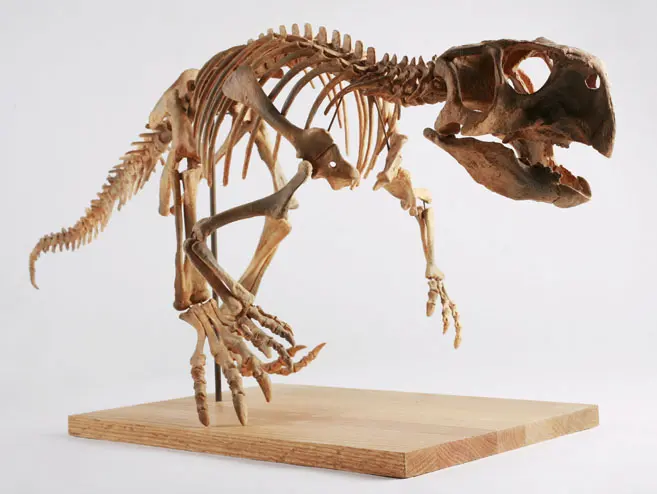
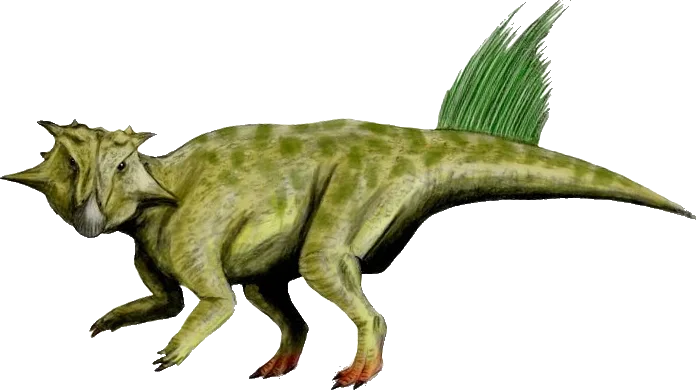
Psittacosaurus was a small dinosaur with a beak like a parrot and bristles on its tail. It was an early cousin of Triceratops.
Psittacosaurus was a small, mostly two-legged early ceratopsian from Early Cretaceous Asia. With more than ten named species and hundreds of specimens, it is one of the most species-rich dinosaur genera, and exceptional fossils preserve its skin, tail bristles and even colour patterns.
How big was it?
Drawn to scale next to a 1.7 m adult and a 12 m school bus.
Did you know?
- Psittacosaurus had a beak just like a parrot!
- It had long bristles sticking up from its tail like a brush.
- It swallowed stones to help mash up food in its tummy.
- Babies walked on four legs, but grown-ups walked on two.
- A specimen in Germany's Senckenberg Museum preserves skin pigment showing countershading — darker above and lighter below — which suggests it lived in dim, forested habitats where this pattern hides animals best.
- The same specimen has a row of long, quill-like bristles on the top of its tail; whether these are related to the feathers of theropods is still debated.
- Bone studies show that hatchlings walked on all fours and switched to walking on two legs as they grew, a change rarely documented so clearly in any dinosaur.
- A fossil of the mammal Repenomamus with baby Psittacosaurus bones in its stomach, and a 2023 fossil of Repenomamus caught attacking a Psittacosaurus bigger than itself, prove that some mammals preyed on dinosaurs.