DinoVerse · Dinosaur fact sheet
Dimetrodon
Say it: dy-MET-roh-don · Name means: “Two measures of teeth”
⚠️ Not a dinosaur: Dimetrodon was a synapsid — part of the group that later gave rise to mammals, so it is more closely related to you than to any dinosaur. It also lived more than 30 million years before the first dinosaurs appeared.
| ⏳ Lived | 295–272 million years ago Early Permian |
|---|---|
| 🥩 Diet | Carnivore (meat-eater) |
| 📏 Length | 1.7–4.6 m (6–15 ft) |
| ↕️ Height | 1–1.5 m (3–5 ft) |
| ⚖️ Weight | 28–250 kg (60–550 lb) |
| 📍 Found in | North America, Europe |
| 🔎 Discovered | 1878 by Edward Drinker Cope |
About Dimetrodon
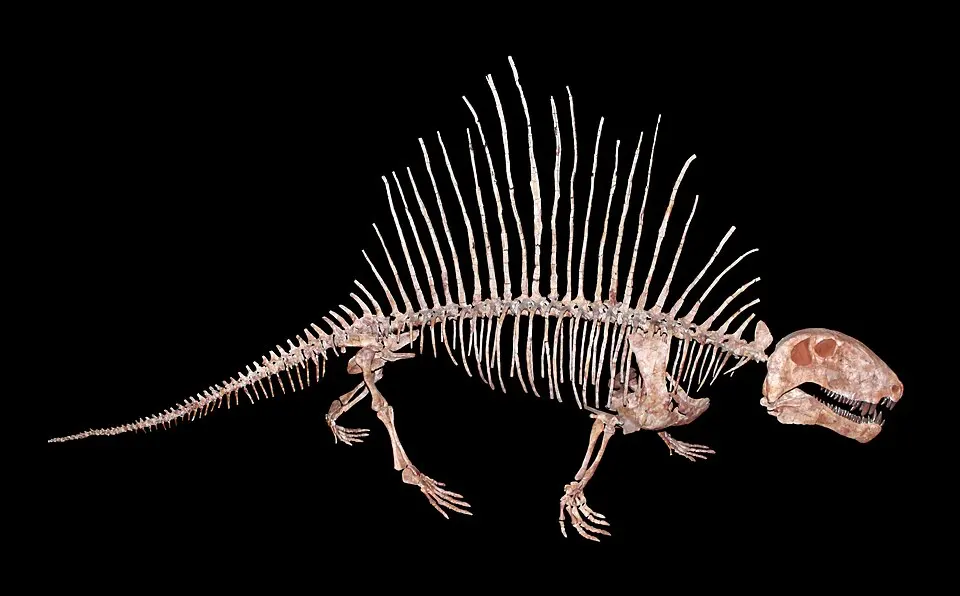
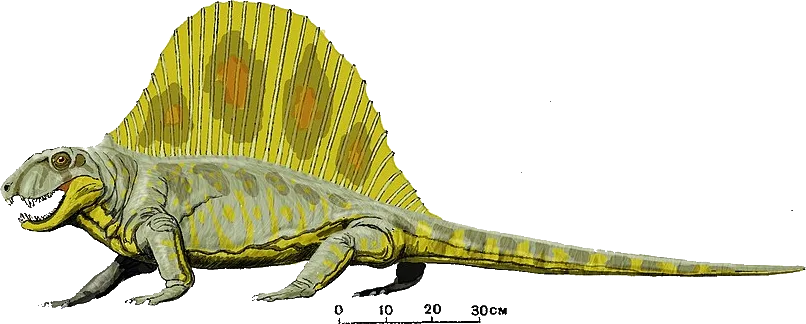
Dimetrodon had a big sail on its back and sharp teeth, but it was NOT a dinosaur. It was actually an ancient relative of mammals — including you!
Dimetrodon was a predatory synapsid from the Early Permian of North America and Europe, living tens of millions of years before dinosaurs. As an early member of the lineage leading to mammals, it shows early stages of features like differentiated teeth and a single skull opening behind the eye.
How big was it?
Drawn to scale next to a 1.7 m adult and a 12 m school bus.
Did you know?
- Dimetrodon is NOT a dinosaur, even though it's often in dinosaur toy sets!
- It is more closely related to people than to T. rex.
- Its sail was held up by long spines growing from its backbone.
- It lived even before the first dinosaurs — way before!
- The sail was once thought to help it warm up in the morning sun, but studies of the spines' blood supply and of small species with tall sails suggest display is a more likely main use; the debate is not fully settled.
- Its name refers to its two kinds of teeth — large canine-like fangs and smaller cutting teeth — an early step towards the varied teeth of mammals.
- Dimetrodon was the top predator in its ecosystem, where prey on land was scarce, and probably also fed on aquatic animals like amphibians and freshwater sharks.
- Like mammals, it had a single opening in the skull behind each eye (the synapsid opening), which anchored strong jaw muscles.