Say it: SEN-troh-SORE-us · Name means: “Pointed lizard”
Key facts about Centrosaurus
⏳ Lived
76.5–75.5 million years ago Late Cretaceous
🌿 Diet
Herbivore (plant-eater)
📏 Length
5–6 m (16–20 ft)
↕️ Height
1.7–2 m (6–7 ft)
⚖️ Weight
2,000–3,000 kg (4,410–6,610 lb)
📍 Found in
North America
🔎 Discovered
1904 by Lawrence Lambe
About Centrosaurus
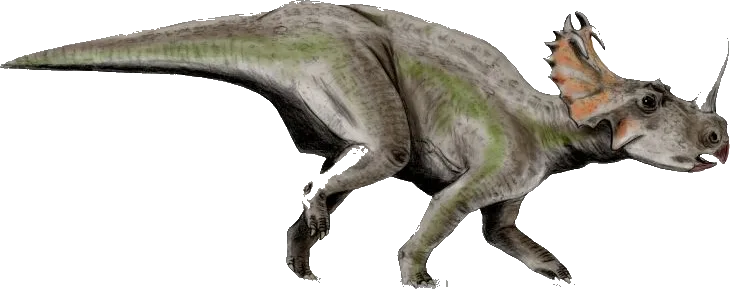
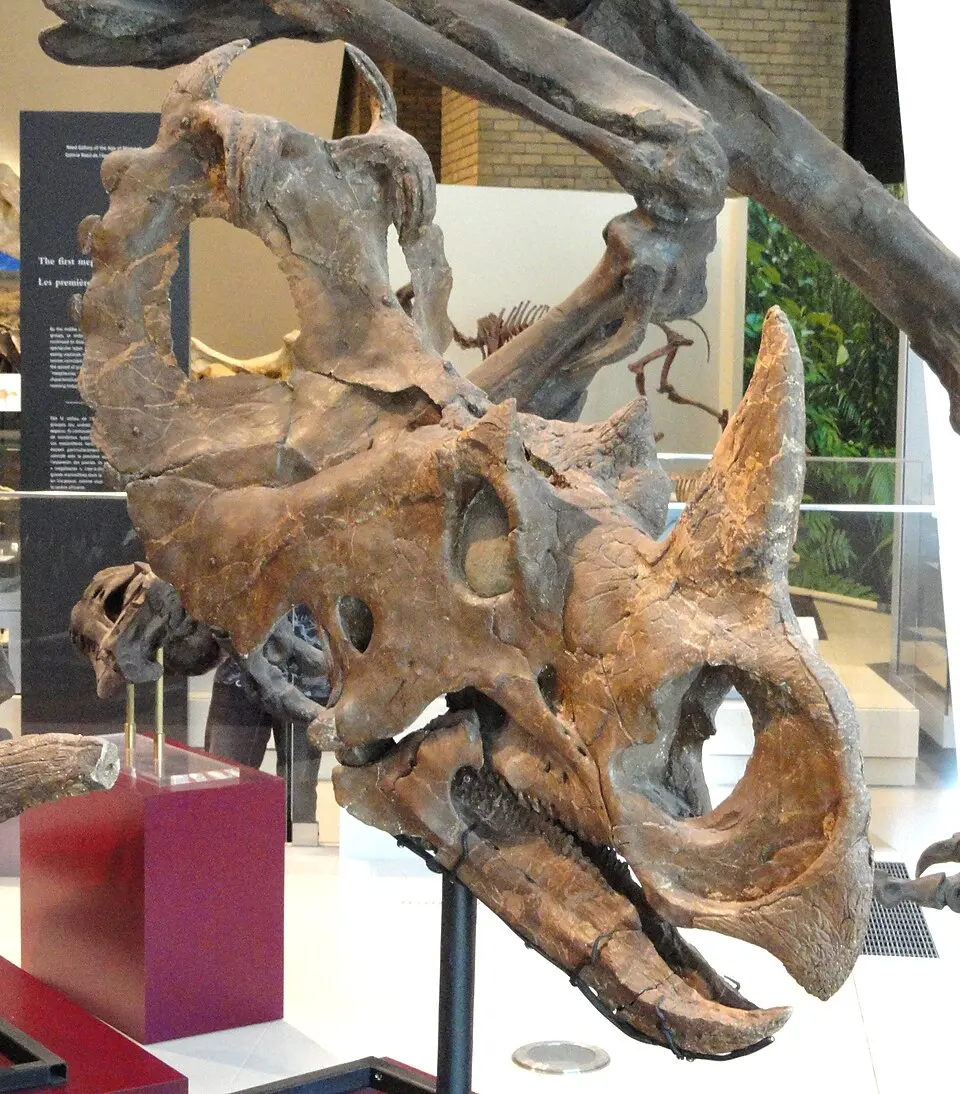
Centrosaurus had one big horn on its nose and two little hooks on its frill. Thousands of them have been found together, so they probably lived in giant herds.
Centrosaurus was a medium-sized centrosaurine ceratopsid from the Dinosaur Park Formation of Alberta. It is known from enormous bonebeds containing the remains of hundreds to thousands of individuals, strong evidence that it gathered in large herds.
Drawn to scale next to a 1.7 m adult and a 12 m school bus.
Did you know?
Scientists have found places packed with thousands of Centrosaurus bones!
Its nose horn could point forwards or curve backwards, depending on the animal.
Two little hooks on its frill curled forward like bent fingers.
One Centrosaurus leg bone shows it had a kind of cancer, just like some animals today.
The Hilda mega-bonebed stretches across several kilometres of Alberta badlands and may record a whole herd drowned by a coastal flood or storm surge.
In 2020 researchers diagnosed osteosarcoma, a malignant bone cancer, in a Centrosaurus fibula — the first confirmed case of this cancer in a dinosaur.
The shape of the nasal horn varied a lot between individuals, which once led scientists to name extra species that are now thought to be ordinary variation.
Like other centrosaurines, its frill was short, with large openings, so it was relatively light and probably used mainly for display.
Picture: Centrosaurus BW.jpg — Nobu Tamura (http://spinops.blogspot.com) (CC BY 3.0)
Picture: Centrosaurus apertus skull and jaws, Dinosaur Provincial Park, Alberta, Canada, Late Cretaceous - Royal Ontario Museum - DSC00078.JPG — Daderot (CC0)
 DinoVerse · Dinosaur fact sheet