DinoVerse · Dinosaur fact sheet
Carnotaurus
Say it: KAR-no-TOR-us · Name means: “Meat-eating bull”
| ⏳ Lived | 72–69 million years ago Late Cretaceous |
|---|---|
| 🥩 Diet | Carnivore (meat-eater) |
| 📏 Length | 7.5–8 m (25–26 ft) |
| ↕️ Height | 2–2.5 m (7–8 ft) |
| ⚖️ Weight | 1,300–2,100 kg (2,870–4,630 lb) |
| 📍 Found in | South America |
| 🔎 Discovered | 1984 by José Bonaparte's expedition (named by Bonaparte in 1985) |
About Carnotaurus
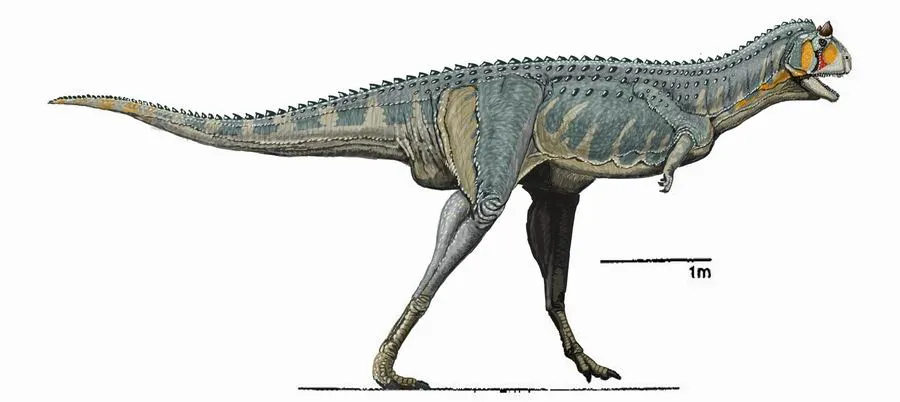
Carnotaurus was a speedy meat-eater with two horns above its eyes, like a bull. Its arms were super tiny, even smaller than T. rex's.
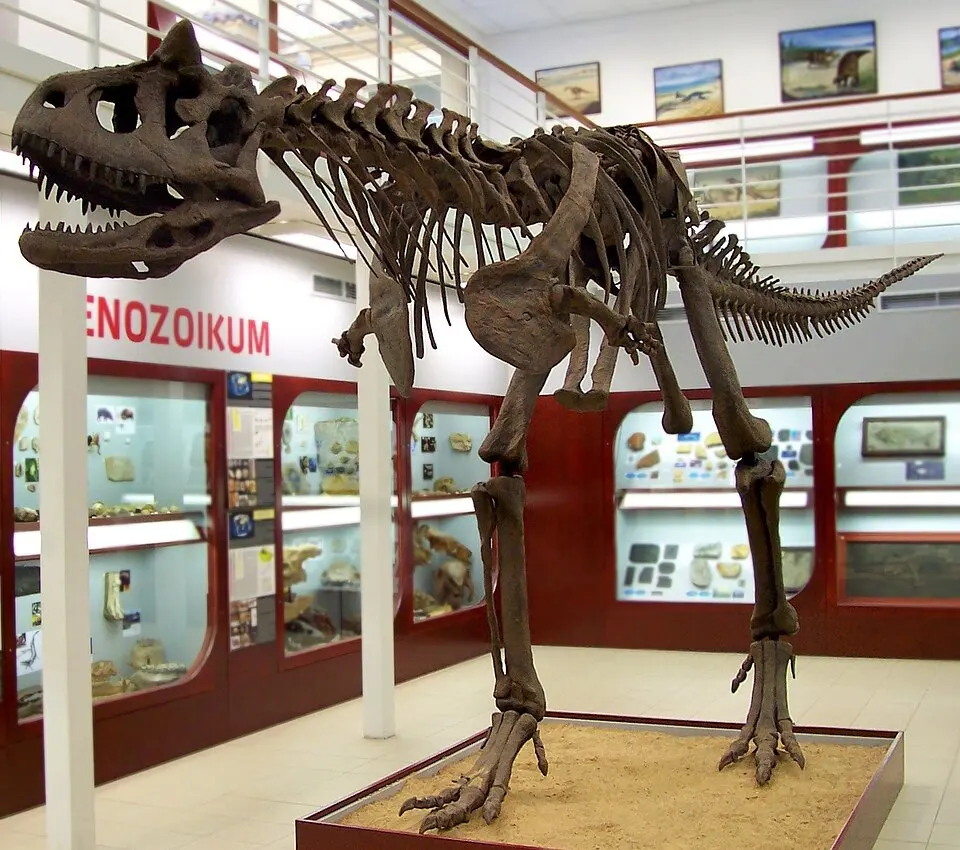
Carnotaurus sastrei was an abelisaurid theropod from Late Cretaceous Patagonia, known from a single remarkably complete skeleton with large patches of skin impressions. Its thick brow horns, deep short skull, stubby forelimbs and powerful tail muscles make it one of the most unusual large predators known.
How big was it?
Drawn to scale next to a 1.7 m adult and a 12 m school bus.
Did you know?
- Carnotaurus had two thick horns over its eyes, just like a bull.
- Its arms were so tiny they were almost useless, even smaller than T. rex's arms!
- We know what its skin looked like because the fossil kept prints of its bumpy scales.
- It had very strong tail muscles, so it may have been one of the fastest big meat-eaters.
- The only known skeleton, found in 1984, preserves extensive skin impressions showing small, non-overlapping scales scattered with larger cone-shaped feature scales, and no sign of feathers.
- Its forearm bones were extremely shortened; the hand bones were fused and probably could barely move, an extreme version of a trend seen in many abelisaurids.
- Enlarged tail ribs anchored a very large caudofemoralis muscle, which suggests strong running ability in a straight line, although its turning ability was probably limited.
- The purpose of the horns is debated: proposals include head-butting or shoving rivals, display to mates, or both.