DinoVerse · Dinosaur fact sheet
Borealopelta
Say it: bor-ee-AL-oh-PEL-tah · Name means: “Northern shield”
| ⏳ Lived | 112–110 million years ago Early Cretaceous |
|---|---|
| 🌿 Diet | Herbivore (plant-eater) |
| 📏 Length | 5–5.5 m (16–18 ft) |
| ↕️ Height | 1.2–1.5 m (4–5 ft) |
| ⚖️ Weight | 1,100–1,500 kg (2,430–3,310 lb) |
| 📍 Found in | North America |
| 🔎 Discovered | 2011 by Shawn Funk, a heavy-equipment operator (named by Caleb Brown and colleagues in 2017) |
About Borealopelta
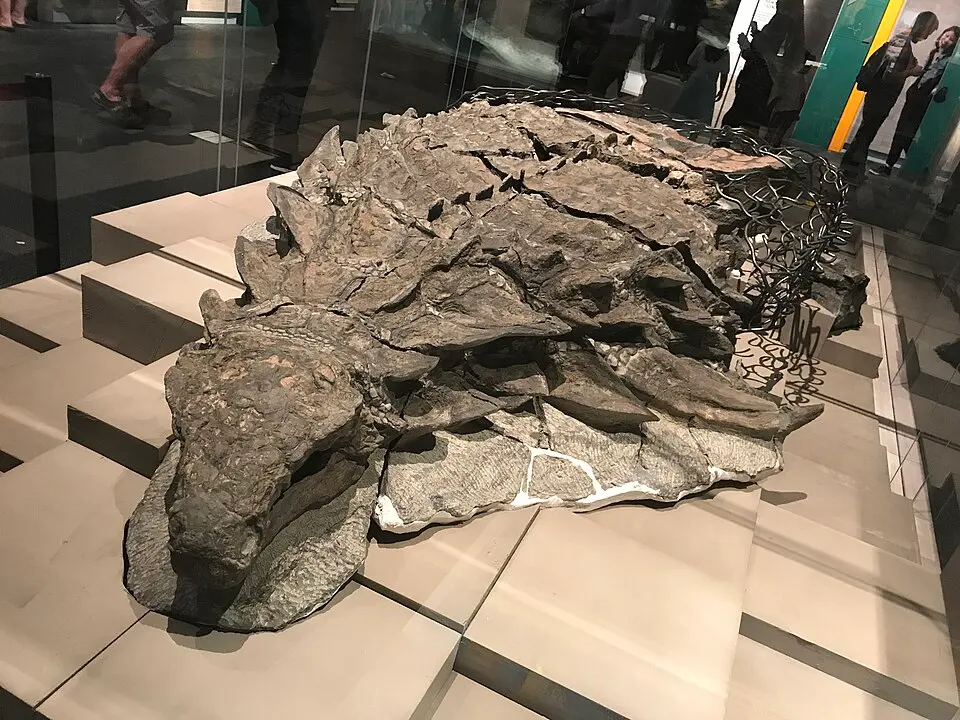
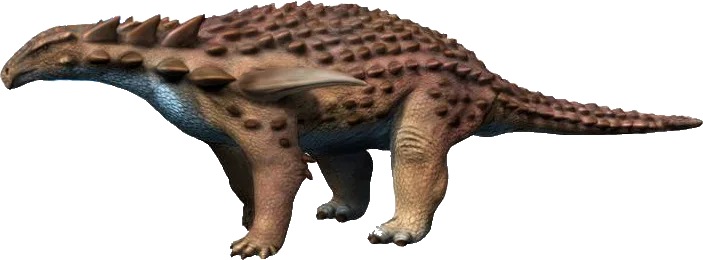
Borealopelta is one of the best-preserved dinosaurs ever found — it still has its armour, skin and even its colours! It was reddish-brown on top and lighter underneath.
Borealopelta was a nodosaurid ankylosaur whose front half was found in 2011 in marine rocks at an oil-sands mine in Alberta. Its armour, keratin coverings and skin are preserved in three dimensions, along with chemical traces of colour and the remains of its last meal.
How big was it?
Drawn to scale next to a 1.7 m adult and a 12 m school bus.
Did you know?
- Borealopelta is so well preserved that people call it a 'dinosaur statue'!
- Scientists found chemicals from its real skin colour: reddish-brown on top, paler underneath.
- Its last meal is still in its tummy — mostly ferns!
- It had two long spikes sticking out from its shoulders.
- Chemical analysis by Caleb Brown and colleagues (2017) detected benzothiazole, a breakdown product of reddish pheomelanin pigment, concentrated on the upper body — evidence of countershading, a camouflage pattern suggesting it still needed to hide from big predators.
- A 2020 study of its fossilised stomach contents found mostly leptosporangiate ferns plus some cycad and conifer bits, and lots of charcoal, suggesting it fed on fresh growth after wildfires.
- Growth rings in tiny twigs from the stomach suggest it died in late spring or summer.
- It probably died near a river, bloated and floated out to sea, then sank belly-up into soft seabed mud, which helped preserve its armour in its natural position.
- The shoulder spikes are about 50 cm long, and some researchers suggest they were used more for display than defence, since they are larger than needed for protection.