DinoVerse · Dinosaur fact sheet
Allosaurus
Say it: AL-oh-SORE-us · Name means: “Different lizard”
| ⏳ Lived | 155–145 million years ago Late Jurassic |
|---|---|
| 🥩 Diet | Carnivore (meat-eater) |
| 📏 Length | 8.5–10 m (28–33 ft) |
| ↕️ Height | 2.3–3 m (8–10 ft) |
| ⚖️ Weight | 1,500–2,500 kg (3,310–5,510 lb) |
| 📍 Found in | North America, Europe |
| 🔎 Discovered | 1877 by Othniel Charles Marsh |
About Allosaurus
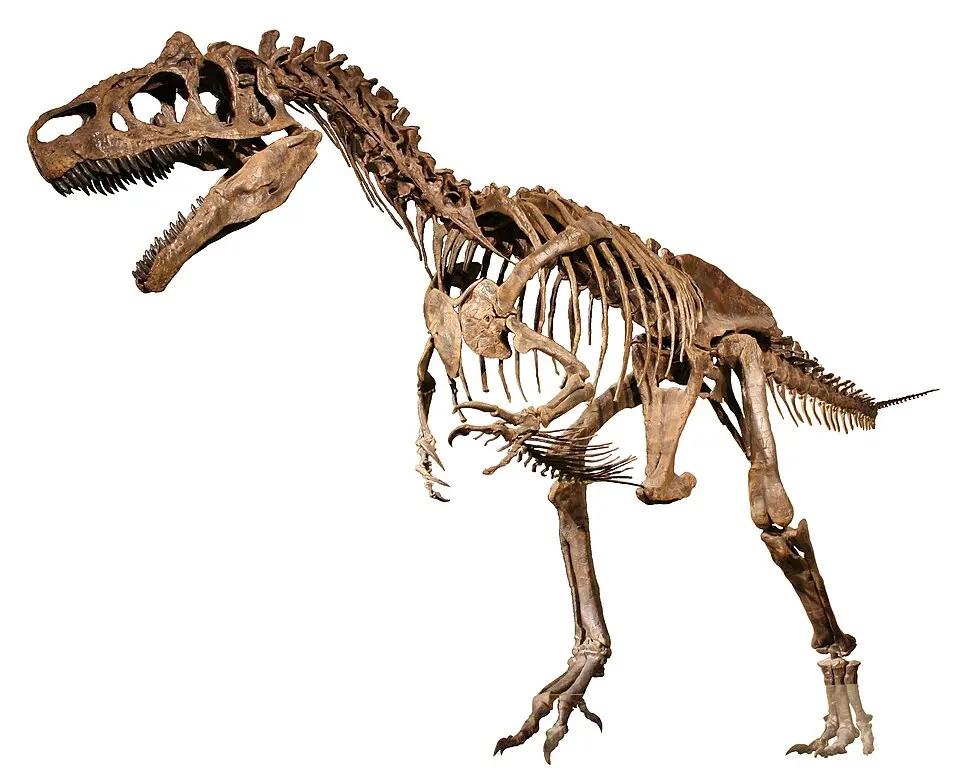
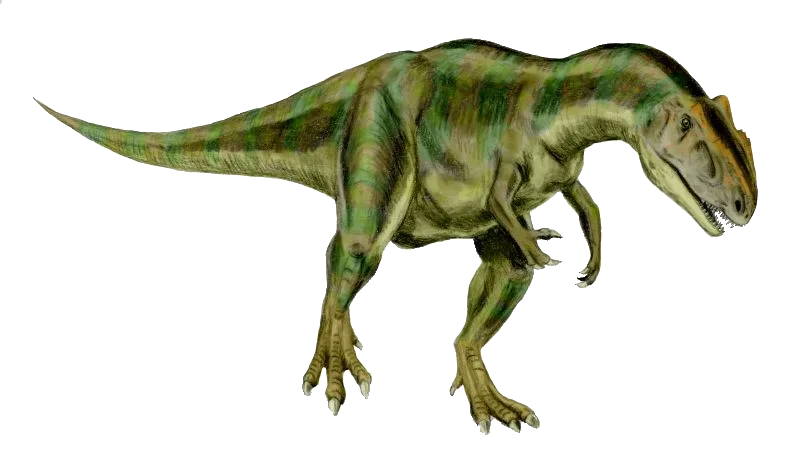
Allosaurus was the top hunter of the Jurassic, long before T. rex. It had little bumps above its eyes and big three-fingered hands with sharp claws.
Allosaurus was a large allosaurid theropod and the most common big predator of North America's Late Jurassic Morrison Formation. Its lightly built skull, hatchet-like bite and grasping three-fingered hands made it a fast, agile hunter of plated dinosaurs and young sauropods.
How big was it?
Drawn to scale next to a 1.7 m adult and a 12 m school bus.
Did you know?
- Allosaurus lived about 80 million years before T. rex, so they never met.
- It had small horns above its eyes, like little eyebrows.
- A famous Allosaurus called 'Big Al' had lots of broken bones and infections, but kept going for a long time.
- Allosaurus may have attacked Stegosaurus, and sometimes got hurt by its spiky tail!
- Computer models of the skull suggest Allosaurus had a relatively weak bite for its size but a very strong skull, so it may have attacked with a fast 'hatchet' strike of the upper jaw rather than a crushing bite.
- A tail vertebra pierced by a Stegosaurus thagomizer spike, and a Stegosaurus neck plate with an Allosaurus-shaped bite, record real fights between these two animals.
- The specimen 'Big Al', found in Wyoming in 1991, shows at least 19 injuries and infections, giving rare insight into how hard life was for a large predator.
- Bite marks made by Allosaurus on other Allosaurus bones suggest it sometimes scavenged or cannibalised its own kind, especially when food was scarce.
- Several species are now recognised, including Allosaurus fragilis, A. jimmadseni (named in 2020) and A. europaeus from Portugal.