DinoVerse · Dinosaur fact sheet
Repenomamus
Say it: REP-en-oh-MAY-mus · Name means: “Reptile mammal”
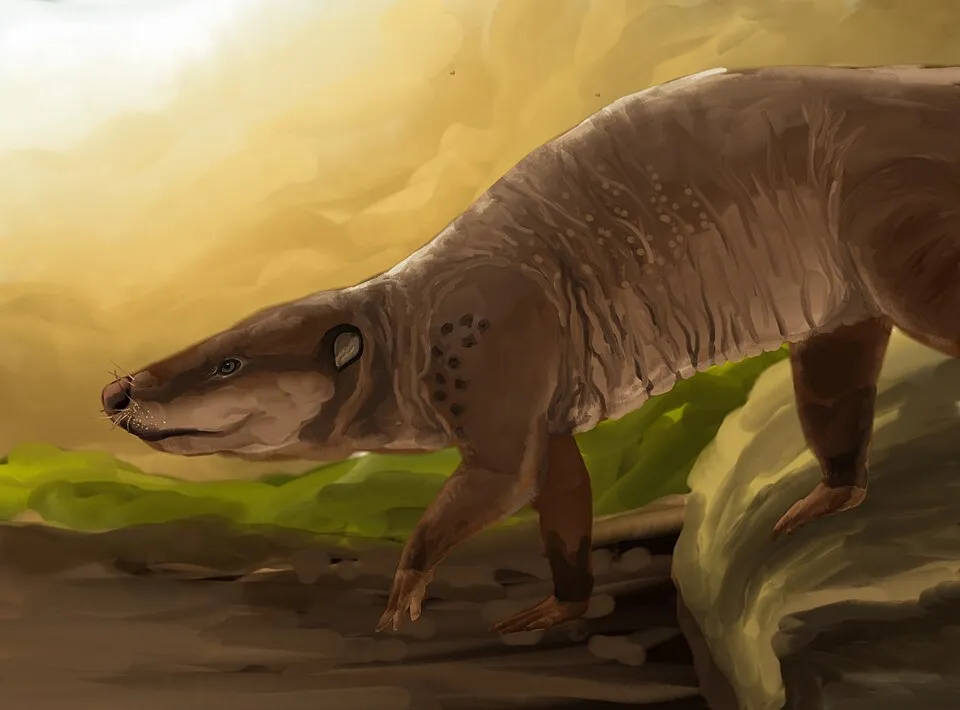
⚠️ Not a dinosaur: Repenomamus was a mammal with fur that fed its babies milk, like badgers or dogs today. Mammals lived at the same time as dinosaurs, but they are on a completely different branch of the animal family tree.
| ⏳ Lived | 125–123 million years ago Early Cretaceous |
|---|---|
| 🥩 Diet | Carnivore (meat-eater) |
| 📏 Length | 0.5–1 m (2–3 ft) |
| ↕️ Height | 0.2–0.3 m (0–1 ft) |
| ⚖️ Weight | 4–14 kg (10–30 lb) |
| 📍 Found in | Asia |
| 🔎 Discovered | 2000 by Li Jinling and colleagues |
About Repenomamus
Repenomamus was a furry mammal about the size of a badger — and it ate baby dinosaurs! It lived in China during the age of dinosaurs.
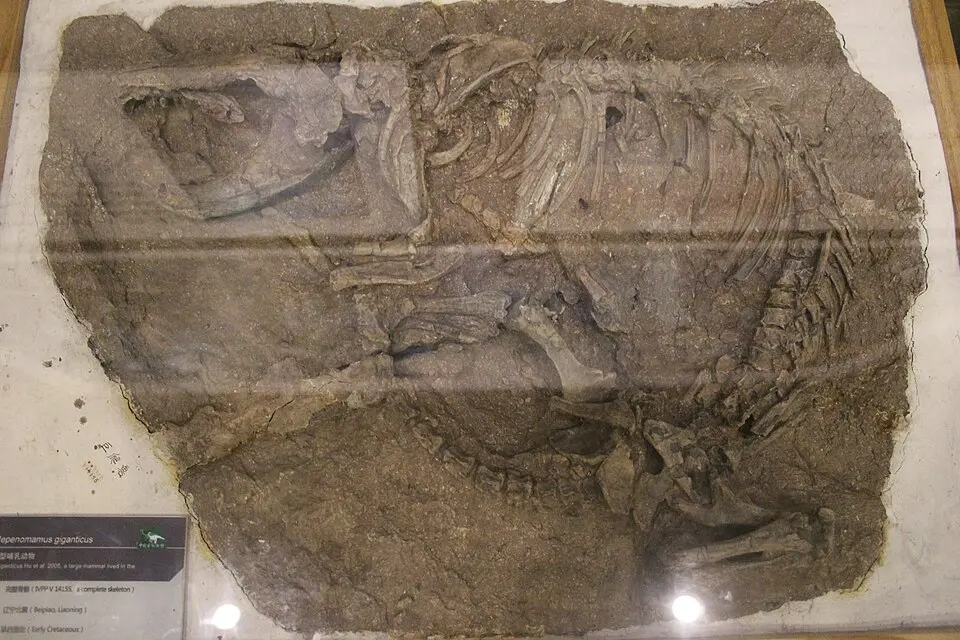
Repenomamus was a gobiconodontid mammal from the Early Cretaceous of northeastern China and one of the largest mammals of the Mesozoic. Fossils showing dinosaur bones in its stomach, and one locked in an attack on a Psittacosaurus, prove that some Mesozoic mammals preyed on dinosaurs.
How big was it?
Drawn to scale next to a 1.7 m adult and a 12 m school bus.
Did you know?
- Repenomamus was a mammal that ate baby dinosaurs!
- It was about the size of a badger or a small dog.
- It had fur, just like a cat or a dog.
- One amazing fossil shows a Repenomamus biting a dinosaur bigger than itself!
- A 2005 study described a specimen of R. robustus with the bones of a juvenile Psittacosaurus in its stomach region, the first direct evidence of a mammal eating a dinosaur.
- In 2023 researchers described a fossil, buried by a volcanic mudflow, of R. robustus gripping and biting a Psittacosaurus about three times its weight, suggesting it actively hunted rather than only scavenging.
- The larger species, R. giganticus, may have weighed over 12 kg, challenging the idea that all mammals in the age of dinosaurs were tiny, shrew-like creatures.
- Repenomamus belongs to the eutriconodonts, an extinct branch of mammals that is not closely related to today's marsupials or placental mammals.