DinoVerse · Dinosaur fact sheet
Microraptor
Say it: MY-kro-RAP-tor · Name means: “Small thief”
| ⏳ Lived | 125–120 million years ago Early Cretaceous |
|---|---|
| 🥩 Diet | Carnivore (meat-eater) |
| 📏 Length | 0.7–1 m (2–3 ft) |
| ↕️ Height | 0.2–0.3 m (0–1 ft) |
| ⚖️ Weight | 0.5–1.4 kg (1.1–3.1 lb) |
| 📍 Found in | Asia |
| 🔎 Discovered | 2000 by Xu Xing, Zhou Zhonghe and Wang Xiaolin |
About Microraptor
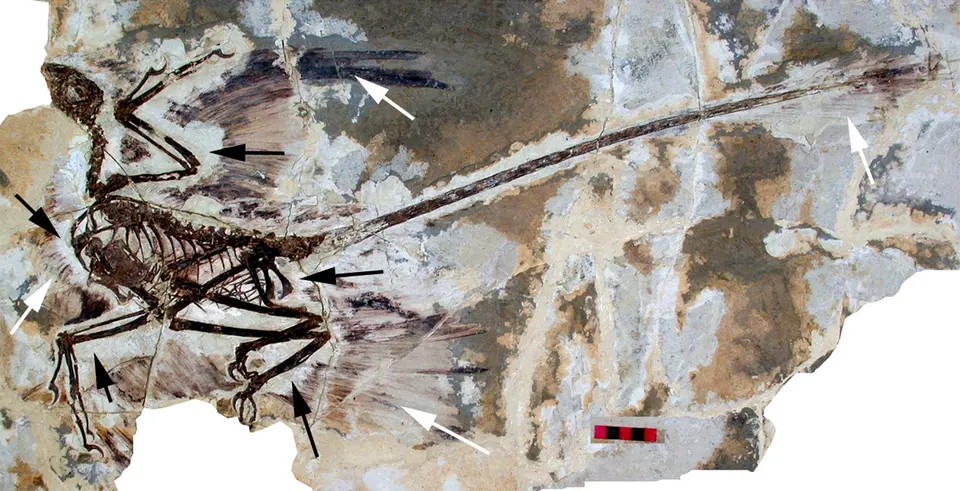
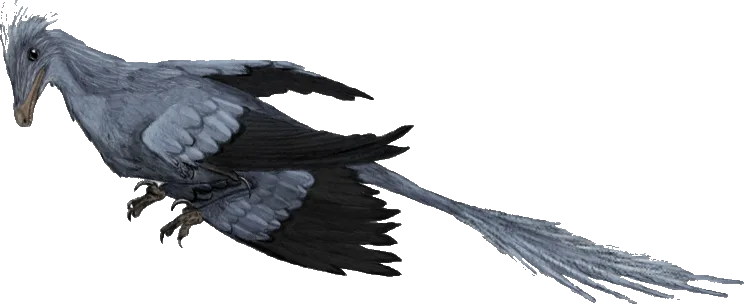
Microraptor was a crow-sized dinosaur with feathered wings on its arms AND its legs. Its feathers were shiny black, like a crow's.
Microraptor was a small dromaeosaurid from the Early Cretaceous forests of northeastern China, preserved with long flight feathers on both its arms and legs. Fossil melanosomes show its plumage was glossy and iridescent black, and it is a key animal in debates about how flight evolved in dinosaurs.
How big was it?
Drawn to scale next to a 1.7 m adult and a 12 m school bus.
Did you know?
- Microraptor had four wings, two on its arms and two on its legs!
- It was about the size of a crow.
- Its feathers were black and shiny, with a rainbow shimmer like a crow's or starling's.
- One Microraptor fossil still had a whole lizard in its tummy.
- In 2012 scientists studied melanosomes, tiny colour-producing structures preserved in its feathers, and found they matched the glossy, iridescent black plumage of modern crows and starlings.
- Stomach contents from different specimens include an enantiornithine bird, fish, a small mammal and the lizard Indrasaurus, showing it was a flexible generalist hunter.
- Whether it could truly flap-fly or only glide is debated; some studies suggest that large, bird-like feathers and shoulder anatomy would have allowed at least limited powered flight.
- Its leg feathers have no direct match among living birds, and researchers still argue about how the hind wings were held during flight.